

Is your routine motorcycle maintenance a back-breaking chore, or are you struggling to find a stable way to store your bike for the winter? If so, it is time to consider investing in a quality motorcycle jack.
This essential garage tool is far more than just a convenience; it is a fundamental piece of equipment for any serious rider who performs their own maintenance, cleaning, or repairs.
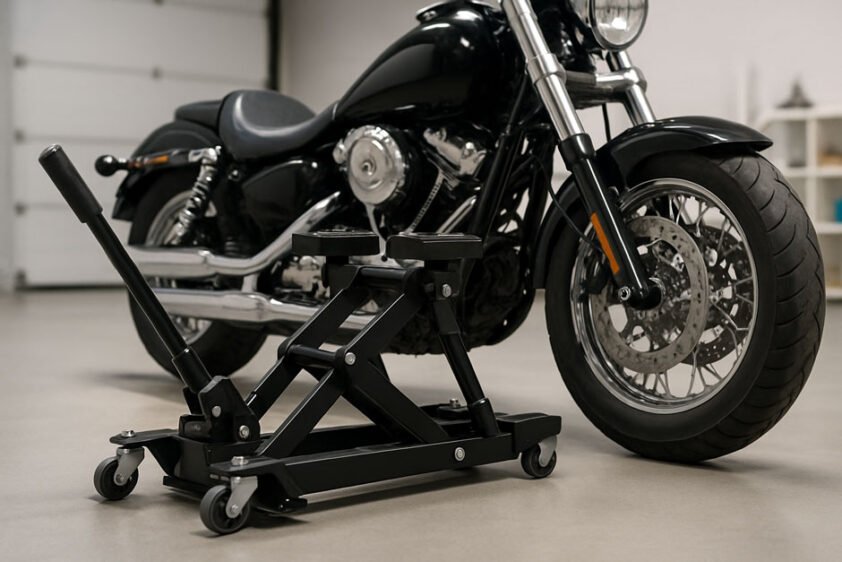
A reliable jack provides the necessary height and stability to lift your motorcycle safely off the ground, granting easy access to the wheels, engine, and undercarriage.
It transforms tasks like oil changes, tire rotations, and detailed cleaning from awkward struggles into straightforward, comfortable procedures.
Understanding the Different Types of Motorcycle Jacks
Choosing the right lifting equipment begins with understanding the core differences between the available types. Each design offers a unique balance of cost, capacity, and ease of use.
Scissor Jacks (Mechanical)
The scissor jack is perhaps the most common and budget-friendly option available to the home mechanic. It operates using a screw mechanism that, when turned, raises the lifting platform.
These jacks are prized for their inherent stability and mechanical reliability, as there are no hydraulic fluids to leak or seals to fail over time.
While they require more manual effort to operate and are slower to lift the bike, their compact size makes them easy to store when not in use.
Hydraulic Jacks (Floor Jacks)
For those seeking speed and convenience, the hydraulic floor jack is an excellent choice. These models use a foot-operated or hand-operated pump to quickly raise the motorcycle.
Hydraulic jacks typically offer a higher weight capacity and a smoother, faster lifting action compared to their mechanical counterparts.
However, they tend to be heavier, more expensive, and require occasional checks for hydraulic fluid levels and potential seal wear.
Air-Powered Jacks (Pneumatic)
Air-powered jacks are the heavy-duty workhorses of the motorcycle lifting world, often found in professional repair shops. They utilize compressed air to lift the bike with minimal effort.
These jacks are the fastest to operate and can handle the heaviest touring bikes and cruisers with ease.
The main drawback is the requirement for a dedicated air compressor, which adds to the initial cost and takes up additional space in the garage.
Lift Tables (Benches)
While technically a lift rather than a jack, the lift table is the ultimate solution for the dedicated enthusiast. It provides a full, stable platform for the entire motorcycle to rest on.
This setup offers the most comfortable and safest working environment, allowing the mechanic to stand or sit comfortably while working on the bike.
Lift tables are the most expensive and space-consuming option, making them best suited for professional garages or large, dedicated home workshops.
Key Factors to Consider Before Buying
Before making a purchase, a few critical specifications must be carefully reviewed to ensure the jack is suitable for your specific motorcycle and maintenance needs.
Weight Capacity and Lifting Range
The most important factor is the jack’s weight capacity. You must ensure the jack can safely handle the “wet weight” of your motorcycle, which includes all fluids and fuel.
It is always recommended to choose a jack with a capacity that significantly exceeds your bike’s weight for an added margin of safety.
Also, check the minimum and maximum lifting height to ensure it can slide under your low-profile bike and lift it high enough for comfortable work.
Stability and Safety Features
A jack’s stability is paramount, as a falling motorcycle can cause serious injury and costly damage. Look for models with a wide, robust base that resists tipping.
Crucial safety features include mechanical locking bars or pins that engage once the bike is lifted, preventing accidental lowering due to hydraulic failure.
Rubber padding on the lifting platform is also essential to protect your motorcycle’s frame and paint from scratches during the lifting process.
Ease of Use and Storage
Consider how often you plan to use the jack and how much space you have available. If storage is a concern, a compact scissor jack might be the best fit.
If you need to move the jack around the garage frequently, look for models equipped with heavy-duty casters or wheels.
The ease of positioning the jack under the bike and the simplicity of the lifting mechanism will greatly affect your overall satisfaction with the tool.
Step-by-Step Guide: Safely Using Your Motorcycle Jack
Using a motorcycle jack correctly is vital for safety and efficiency. Always follow these steps to ensure a secure lift.
First, ensure you are working on a flat, level, and non-slip concrete surface. Never attempt to lift a bike on gravel, dirt, or asphalt that might soften in the heat.
Next, locate the correct lifting points on your motorcycle’s frame, as specified in your owner’s manual. Incorrect placement can damage the bike or cause it to slip.
Slowly begin to raise the jack, constantly watching the motorcycle to ensure it is lifting evenly and remains centered on the platform.
Once the bike is at the desired height, immediately engage the mechanical safety lock or pin. Never work under a bike supported only by hydraulic pressure.
Finally, and most importantly, always use heavy-duty tie-down straps to secure the motorcycle to the jack’s frame before you begin any work. This prevents accidental movement or tipping.
Frequently Asked Questions (FAQ)
Q: How much weight can a motorcycle jack hold?
A: Most consumer-grade motorcycle jacks are rated to hold between 1,000 pounds and 1,700 pounds. This range is sufficient for nearly all cruisers, touring bikes, and sport bikes. Always verify the specific capacity listed by the manufacturer.
Q: Can I leave my motorcycle on the jack overnight?
A: Yes, it is generally safe to leave a motorcycle on a jack for extended periods, provided two conditions are met: the mechanical safety lock is fully engaged, and the bike is securely fastened to the jack with tie-down straps. Never leave a bike supported solely by the hydraulic cylinder.
Q: What is the difference between a motorcycle jack and a lift table?
A: A motorcycle jack is a compact device that lifts the bike from a central point on the frame, primarily used for wheel and undercarriage access. A lift table is a large, ramped platform that lifts the entire motorcycle, offering a full working surface and greater stability for comprehensive repairs.
Q: Do I need a special adapter for my bike?
A: Some motorcycles, particularly those with non-standard frame designs or fairings, may require specific adapters or frame rails to ensure the jack makes safe and stable contact. Always check the jack manufacturer’s compatibility list or consult your bike’s service manual.