The Witch is a 2015 folk horror film written and directed by Robert Eggers in his feature directorial debut. It stars Anya Taylor-Joy in her feature film debut, alongside Ralph Ineson, Kate Dickie, Harvey Scrimshaw, Ellie Grainger, and Lucas Dawson. Set in 1630s New England, the narrative follows a Puritan family who are preyed upon by an evil force in the woods beyond their farm.
In fear and desperation, they turn upon one another. An international co-production of the United States and Canada, the film premiered at the Sundance Film Festival on January 27, 2015, and was widely released by A24 on February 19, 2016. It was a critical and financial success, grossing $40 million against a $4 million budget, and is considered by some to be one of the best horror films of the 2010s and the 21st century.
A New Breed of Horror: The Enduring Legacy of The Witch
In an era saturated with jump scares and predictable tropes, Robert Eggers’ The Witch emerged as a chilling anomaly. It was a film that didn’t just want to frighten audiences; it aimed to burrow deep into their psyche, leaving a lasting sense of unease.
Its release marked a significant turning point for the horror genre, heralding a resurgence of a subgenre that had long been dormant.
The Rise of Folk Horror
The Witch is a quintessential example of folk horror, a subgenre that draws its terror from folklore, the occult, and the clash between civilization and the untamed wilderness. The film’s power lies in its ability to transport viewers to a time when superstition and religious fervor governed every aspect of life.
By grounding its supernatural elements in historical accounts and beliefs, the film creates a world that feels terrifyingly real.
A Story Steeped in Authenticity
Eggers’ commitment to historical accuracy is a key ingredient in the film’s terrifying recipe. From the meticulously crafted sets and costumes to the authentic Jacobean dialogue, every detail is designed to immerse the audience in the 17th-century Puritan world.
This dedication to authenticity makes the unfolding horror all the more believable and, therefore, all the more frightening.
The Anatomy of Fear: Deconstructing the Horror in The Witch
The horror in The Witch is not about what you see, but what you don’t. It’s a masterclass in psychological terror, relying on atmosphere, suggestion, and the power of the unseen to create a pervasive sense of dread.
Atmosphere Over Jump Scares
Unlike many of its contemporaries, The Witch eschews cheap jump scares in favor of a slow-burning, atmospheric horror. The film’s oppressive and desolate tone, coupled with its bleak, naturalistic cinematography, creates a constant feeling of unease.
The horror builds gradually, seeping into every frame until it becomes almost unbearable.
The Unseen Terror
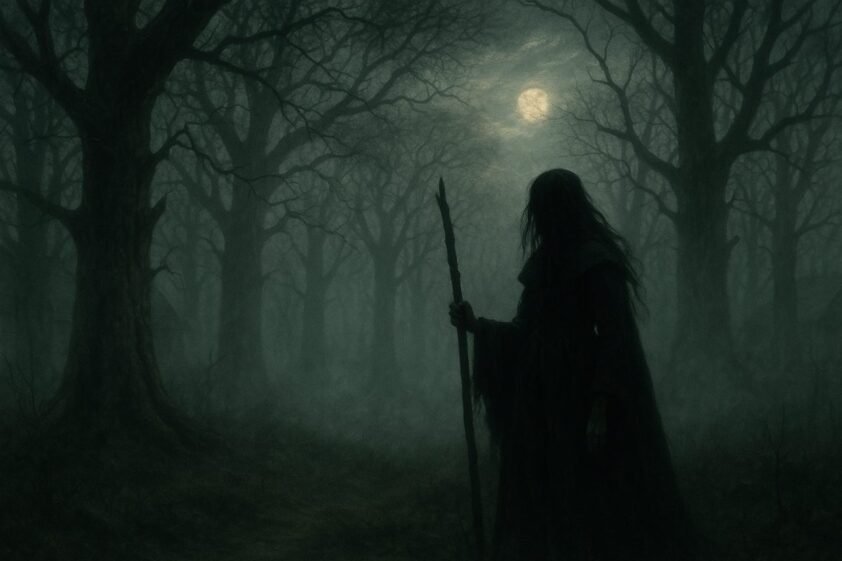
Much of the film’s terror is derived from the unknown. The titular witch is a shadowy figure, glimpsed only in fleeting, nightmarish visions.
This ambiguity makes her all the more terrifying, as the audience is forced to confront their own fears and imagine what horrors lie just beyond the frame.
The Sound of Dread
Mark Korven’s score is a crucial element in the film’s terrifying soundscape. The dissonant, screeching strings and unsettling choral arrangements create a sense of impending doom.
The sound design is as much a part of the horror as the visuals, working in tandem to create a truly immersive and terrifying experience.
More Than a Monster: Thematic Depth in The Witch
Beneath its terrifying surface, The Witch is a complex and layered film that explores a multitude of themes. It’s a story about faith, family, and the destructive power of fear.
Religion, Sin, and Damnation
The film offers a scathing critique of religious extremism, showing how blind faith can lead to paranoia, persecution, and ultimately, damnation.
The family’s unwavering belief in their own righteousness blinds them to the true evil that lurks both within and without.
The Oppression of Patriarchy
The Witch is also a powerful allegory for the oppression of women. Thomasin, the film’s protagonist, is a young woman coming of age in a patriarchal society that fears and mistrusts female sexuality.
Her journey from innocent victim to powerful witch can be seen as a radical act of rebellion against the oppressive forces that seek to control her.
The Terrifying Power of Nature
The vast, untamed wilderness that surrounds the family’s farm is a character in itself. It represents the unknown, the untamable, and the primal forces that lie just beyond the boundaries of civilization.
The forest is a place of both beauty and terror, a place where the old ways still hold sway.
A Critical Darling: The Witch’s Impact and Acclaim
Upon its release, The Witch was met with widespread critical acclaim. It was praised for its originality, its masterful direction, and its powerful performances.
The film went on to win numerous awards and is now considered a modern horror classic.
Redefining a Genre
The Witch has had a profound impact on the horror genre, inspiring a new wave of “elevated” horror films that prioritize atmosphere, psychological terror, and thematic depth over cheap thrills.
It proved that horror could be both terrifying and thought-provoking, and that there was a market for intelligent, artful horror films.
A Launchpad for Stars
The film also served as a launchpad for its talented cast, particularly Anya Taylor-Joy, who delivered a star-making performance as Thomasin.
Her portrayal of a young woman on the brink of damnation was both heartbreaking and terrifying, and it established her as one of the most exciting young actors of her generation.
Conclusion: Why The Witch Still Haunts Us
The Witch is a film that stays with you long after the credits roll. It’s a film that gets under your skin and into your head, a film that makes you question your own beliefs and fears.
It’s a film that reminds us that the most terrifying monsters are often the ones we create ourselves. And that is why, years after its release, The Witch still haunts us.