

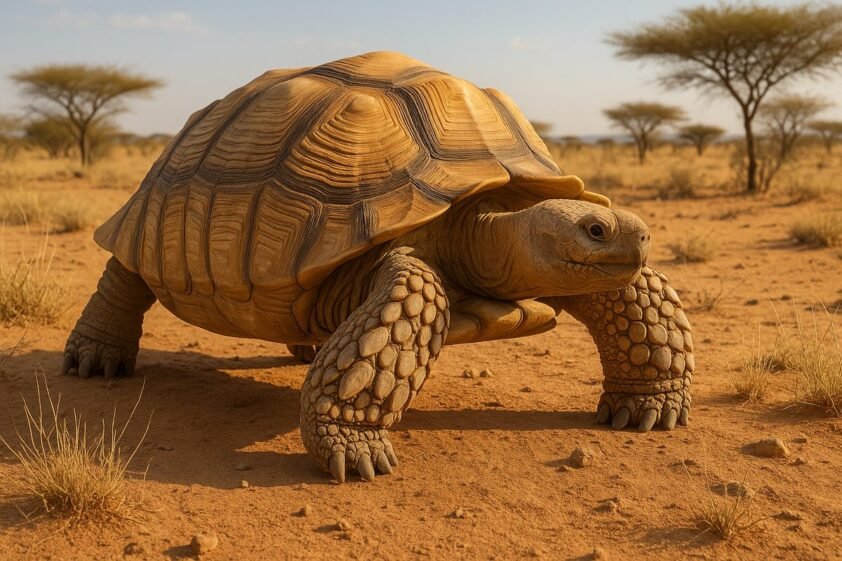
An Introduction to the Sulcata
What is an African Spurred Tortoise?
The African Spurred Tortoise, known scientifically as Centrochelys sulcata, is a remarkable reptile native to the arid landscapes of Africa. It is more commonly referred to as the sulcata tortoise, a name derived from the Latin word “sulcus,” which means furrow, referencing the deep grooves on its shell.
These tortoises are the only living species within their genus, making them a unique and fascinating subject of study. Their resilience and distinct appearance have captivated reptile enthusiasts and conservationists alike.
Third-Largest in the World
Among the world’s tortoises, the sulcata holds the impressive title of being the third-largest species. It is surpassed in size only by the giant tortoises of the Galápagos Islands and Aldabra Atoll.
As the largest of all mainland tortoise species, its sheer size sets it apart from other terrestrial reptiles, making it a true giant of the African continent.
Physical Characteristics of a Desert Dweller
A Shell Built for Defense
The sulcata’s shell is a masterpiece of natural engineering. Its light brown to yellow coloration provides excellent camouflage in its native desert environment. The shell is characterized by prominent growth rings on each scute, which become more defined with age.
The tortoise’s front legs are covered in large, overlapping scales that offer protection, while its hind legs feature the distinctive spurs that give the species its name. The edges of the shell are serrated, adding to its defensive capabilities.
Impressive Size and Weight
Adult male sulcatas can reach a staggering weight of up to 200 pounds (90 kilograms) and measure over 30 inches (76 centimeters) in length. Females are smaller but still substantial, typically weighing up to 90 pounds (40 kilograms).
In stark contrast, hatchlings are incredibly small, measuring only about two inches at birth. Their rapid growth in the early years of life is a testament to their hardy nature.
Native Habitat and Range
Life in the Sahel
The African Spurred Tortoise is indigenous to the southern edge of the Sahara Desert and the Sahel, a transitional zone of semi-arid grasslands and savannas. Its range spans across several African nations, including Senegal, Mali, Chad, and Ethiopia.
These tortoises are perfectly adapted to life in hot, arid climates. They thrive in areas with sparse vegetation, including shrubs and tall grasses, and are often found on hills and stable dunes.
Masters of Camouflage
The sandy, earthy tones of the sulcata’s shell allow it to blend seamlessly into its desert surroundings. This natural camouflage is crucial for avoiding detection by the few predators capable of threatening them.
Their ability to remain inconspicuous in the vast, open landscapes of the Sahel is a key survival trait, particularly for younger, more vulnerable tortoises.
Behavior and Remarkable Adaptations
The Art of the Burrow
To survive the extreme heat of the desert, the sulcata tortoise is an expert excavator. It digs extensive burrows that can reach depths of over 10 feet, providing a cool refuge from the scorching daytime temperatures.
These burrows are not only essential for the tortoise’s survival but also provide shelter for other desert animals, playing a vital role in the local ecosystem.
A Day in the Life
Sulcatas are crepuscular, meaning they are most active during the cooler hours of dawn and dusk. They spend the hottest parts of the day in their burrows to conserve energy and avoid overheating.
These tortoises are known for their curious and generally docile nature. While they are not aggressive, males can become territorial during the breeding season, engaging in dramatic ramming contests.
A Herbivore’s Diet
Foraging in the Wild
As strict herbivores, African Spurred Tortoises have a diet that is high in fiber and low in protein. In their natural habitat, they graze on a variety of grasses, weeds, flowers, and cacti.
Their digestive system is adapted to process tough, fibrous plant matter, extracting the necessary nutrients from the sparse vegetation available in their arid environment.
What to Avoid Feeding
When cared for by humans, it is crucial to replicate their natural diet as closely as possible. Foods high in protein and sugar, especially fruits, should be strictly avoided as they can cause serious health problems.
A diet rich in various grasses and hay, supplemented with dark, leafy greens, is ideal. Access to fresh water and a calcium source is also essential for their well-being.
Lifespan and Reproduction
A Century of Life
The African Spurred Tortoise is one of the longest-living animals on the planet, with a lifespan that can exceed 70 years and potentially reach over a century in optimal conditions.
This incredible longevity means that owning a sulcata is a lifelong commitment, a factor that potential caretakers must seriously consider.
Nesting and Hatchlings
These tortoises reach sexual maturity at around 10 to 15 years of age. After mating, the female digs a nest where she lays a clutch of 15 to 30 eggs. The incubation period is lengthy, lasting approximately eight months.
Upon hatching, the small and vulnerable tortoises must fend for themselves, embarking on a long journey to adulthood.
An Endangered Species
Threats to Survival
Despite their resilience, the African Spurred Tortoise is classified as an endangered species. Its populations have declined dramatically due to a combination of factors.
Habitat loss from urbanization and agriculture, competition with livestock for grazing land, and the illegal pet trade are the primary threats to their survival in the wild.
Conservation Efforts
Fortunately, efforts are underway to protect this magnificent species. Conservation initiatives include habitat restoration, anti-poaching patrols, and captive breeding programs.
Reintroduction programs have shown promising results, with a high survival rate for tortoises returned to protected areas in their native range.
The Sulcata as a Pet
A Lifelong Commitment
The sulcata’s impressive lifespan and large size make it a demanding pet. They require a significant amount of space, specialized care, and a substantial financial investment over their lifetime.
Prospective owners must be prepared for the responsibility of caring for a large, long-lived animal that will likely outlive them.
Unique Care Requirements
Providing a suitable environment for a sulcata tortoise is a complex task. They need a large, secure outdoor enclosure that allows for natural grazing and burrowing behavior.
Proper heating, lighting, and humidity levels are critical, especially for tortoises housed indoors. A carefully managed diet is also essential to prevent common health issues like metabolic bone disease and shell deformities.
Conclusion: A Species Worth Protecting
The African Spurred Tortoise is a truly remarkable creature, a symbol of endurance and adaptation in one of the world’s harshest environments. Its gentle nature and impressive presence have made it a beloved animal, but its future is uncertain.
By supporting conservation efforts and promoting responsible pet ownership, we can help ensure that these gentle giants continue to roam the savannas of Africa for generations to come.