
Introduction: The Rise of the Coupe-SUV
With so many mid-size SUVs crowding the market, how does the Volkswagen Atlas Sport—officially known as the Atlas Cross Sport—manage to stand out? Is it merely a style exercise, or does it offer a genuinely compelling package for modern drivers?
The trend of the coupe-SUV, blending the practicality of a utility vehicle with a more aggressive, sloped roofline, has gained significant traction. Volkswagen’s entry into this segment aims to capture buyers who prioritize design and a sportier stance over maximum passenger capacity.
This review will explore what makes the Atlas Cross Sport a unique proposition in its class, comparing it directly to its three-row sibling and examining its performance, features, and overall value.
What Sets the Atlas Cross Sport Apart?
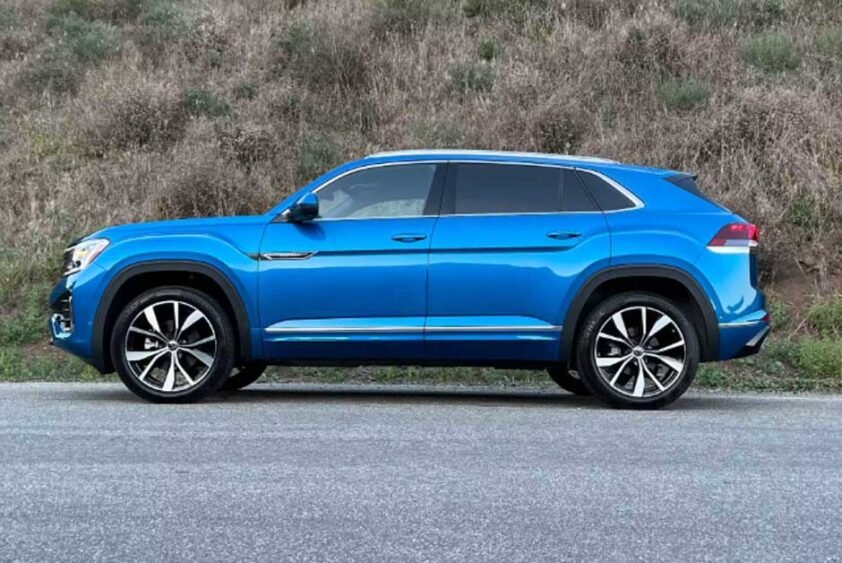
The most immediate difference is the design. The Atlas Cross Sport sheds the boxy, family-hauler look of the standard Atlas for a more rakish, fastback profile. This gives it a distinct visual appeal that is both muscular and modern.
Beyond the sheet metal, the Cross Sport benefits from the same recent updates applied to the Atlas lineup, including a more refined interior and a simplified, yet powerful, engine option. It is positioned as the more style-conscious choice in the Volkswagen SUV family.
It targets a specific buyer: one who appreciates the commanding road presence of a large SUV but doesn’t require the third row of seating, opting instead for a more dynamic aesthetic.
Atlas vs. Atlas Sport: The Key Differences
The relationship between the Atlas and the Atlas Cross Sport is crucial to understanding the latter’s appeal. They share the same platform and wheelbase, but their intentions are fundamentally different.
The Cross Sport is essentially a two-row version of the Atlas, designed to be shorter and sleeker. This difference in dimensions is the root of all other variations between the two models.
Size and Seating: Two Rows vs. Three
The standard Volkswagen Atlas is a true three-row SUV, capable of seating up to seven passengers. It is built for larger families and those who frequently need the extra seats.
In contrast, the Atlas Cross Sport is strictly a five-seater. By eliminating the third row, it offers a more spacious and comfortable experience for the first two rows, particularly for rear-seat passengers.
This design choice is a major selling point for couples or smaller families who want a large vehicle without the compromise of a cramped third row.
Cargo and Utility: Trading Space for Style
While the Cross Sport is shorter overall, it still boasts impressive cargo capacity, especially with the rear seats folded down. However, the standard Atlas ultimately offers more overall volume due to its boxier shape and longer body.
The sloping roofline of the Atlas Cross Sport, while stylish, does slightly reduce the maximum vertical cargo space compared to the upright design of the Atlas. Buyers must weigh this minor utility trade-off against the vehicle’s enhanced visual appeal.
For most daily tasks and even long road trips, the Cross Sport’s cargo area remains more than adequate, easily swallowing luggage, sports gear, and shopping hauls.
Power and Performance Under the Hood
Volkswagen has streamlined the powertrain for the latest models, focusing on a single, highly capable engine. Both the Atlas and the Atlas Cross Sport now feature a turbocharged 2.0-liter four-cylinder engine.
This engine delivers a robust 269 horsepower and 273 lb-ft of torque, providing plenty of power for merging onto highways and passing slower traffic. It is paired with an eight-speed automatic transmission that shifts smoothly and responsively.
The driving experience is characterized by a composed and comfortable ride, with handling that feels reasonably athletic for a vehicle of this size. The available 4Motion all-wheel-drive system ensures confident traction in various weather conditions.
A Look Inside: Interior Comfort and Technology
Stepping inside the Atlas Cross Sport reveals a cabin that has been significantly upgraded in recent years. The design is modern and tech-centric, offering a premium feel that rivals more expensive competitors.
Higher trims feature soft-touch materials, comfortable seating, and a clean, driver-focused layout. The digital cockpit display is standard, providing a customizable view of driving information.
However, one point of contention for some drivers is the increased reliance on touch-sensitive controls for climate and audio functions. While sleek, they can sometimes be less intuitive to use than traditional physical buttons and knobs.
The Verdict: Pros, Cons, and Who Should Buy It
The Volkswagen Atlas Sport (Cross Sport) is a strong contender in the mid-size SUV segment. Its blend of bold styling, a spacious two-row interior, and a powerful standard engine makes it a compelling choice.
Pros: Stylish coupe-SUV design, voluminous and comfortable cabin, strong standard turbocharged engine, and a composed ride quality.
Cons: The sloping roof slightly compromises maximum cargo height, and the touch-sensitive controls can be frustrating for some users.
If you are a buyer who loves the size and presence of the Atlas but doesn’t need the third row, and you prefer a sportier, more distinctive look, the Atlas Cross Sport is an excellent fit. It successfully merges utility with undeniable style.
Frequently Asked Questions (FAQ)
Is the Volkswagen Atlas Cross Sport a good car?
Yes, the Atlas Cross Sport is generally considered a good car. Reviewers praise its comfortable ride, spacious interior, and powerful standard engine. It offers a great balance of style and practicality.
What is the difference between the Atlas and the Atlas Cross Sport?
The main difference is size and seating. The Atlas is longer and has three rows of seating for up to seven passengers. The Atlas Cross Sport is shorter, has a more sloped roofline, and only offers two rows for five passengers.
Does the Atlas Cross Sport have a third row?
No, the Volkswagen Atlas Cross Sport is exclusively a two-row SUV designed to seat a maximum of five people. If you require a third row, you should consider the standard Volkswagen Atlas.
What engine is in the Atlas Cross Sport?
The latest models of the Atlas Cross Sport are powered by a turbocharged 2.0-liter four-cylinder engine that produces 269 horsepower and 273 lb-ft of torque.