
Have you ever considered the quiet power held within the bark of a common forest tree? The Prunus serotina, commonly known as the Black Cherry, is far more than just another hardwood species; it is a cornerstone of North American ecology and a source of one of the continent’s most prized timbers.
This tree has a dual identity, celebrated in its native lands for its utility and beauty, yet viewed with caution in parts of Europe where it has become an aggressive invader. Understanding this complex species requires a look at its characteristics, its role in nature, and its long history of human use.
Identification and Characteristics
The Black Cherry is a majestic native of the Eastern United States, often reaching impressive heights and commanding attention in the forest canopy. Its identification is relatively straightforward, even for the casual observer, due to several distinctive features that change as the tree matures.
Bark, Leaves, and Flowers
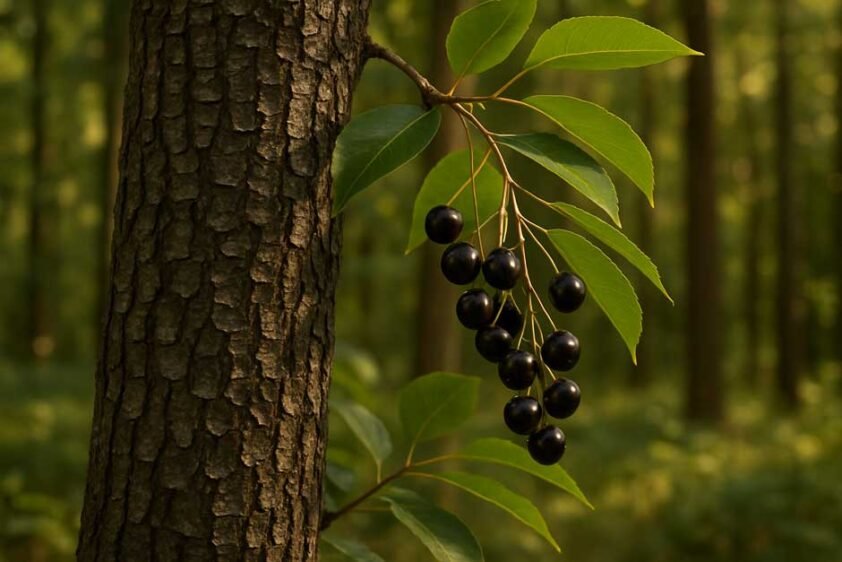
Perhaps the most telling feature of a mature Prunus serotina is its bark. It develops a unique, dark, scaly appearance often described as looking like burnt potato chips or cornflakes, making it one of the easiest trees to identify in the winter landscape.
The leaves are simple, finely toothed, and glossy green, turning a beautiful yellow and red in the autumn. When crushed, the leaves often emit a distinct, bitter almond scent, a characteristic shared by many members of the cherry family.
In the spring, the tree produces showy, white flowers in long, drooping clusters called racemes. These flowers are a vital early source of nectar for pollinators and eventually give way to the small, dark, purplish-black fruits that give the tree its common name.
Size and Habitat
As the largest native cherry species, Prunus serotina can grow to heights of 50 to 80 feet, and occasionally even taller in ideal conditions. It is a fast-growing, light-demanding species that thrives in forest gaps and disturbed ground.
It is highly adaptable and can tolerate a wide range of soil conditions, though it prefers deep, moist, and fertile sites. Its extensive native range stretches across the entire Eastern United States and into parts of Canada and Mexico.
Ecological Role and Impact
The Black Cherry plays a critical, if sometimes controversial, role in the ecosystems it inhabits. Its ability to colonize open areas quickly makes it a pioneer species, helping to establish new forests.
A Native’s Value: Wildlife Host
As a native species, Prunus serotina is an exceptional host plant. It supports a remarkable diversity of wildlife, including over 450 species of moths and butterflies, making it one of the most important food sources for native insects.
The small, dark fruits are a favorite food for numerous bird species, as well as mammals like raccoons and foxes. These animals, in turn, help to disperse the seeds, ensuring the tree’s continued spread throughout the landscape.
The Invasive Side: European Forests
While valued in North America, the tree has become a widespread invasive species in many European temperate forests. Introduced for timber and ornamental purposes, it quickly forms dense, homogeneous stands.
In these non-native environments, Prunus serotina can limit the recruitment of native tree species, altering the local ecosystem structure and reducing biodiversity. This highlights the complex ecological dynamics of the species.
The Prized Timber: Black Cherry Wood
The wood of the Black Cherry is arguably its most commercially valuable asset. It is highly sought after by furniture makers and cabinetmakers for its exceptional quality and aesthetic appeal.
The heartwood is a rich reddish-brown color that deepens and darkens beautifully with age and exposure to light. It is known for being strong, hard, and close-grained, making it a favorite for fine woodworking.
Its stability and workability, combined with its elegant finish, place black cherry wood among the most valued domestic hardwoods, often used for high-end cabinetry, musical instruments, and decorative veneers.
Uses Beyond Wood: Fruit and Medicinal Bark
The utility of Prunus serotina extends far beyond its timber. Both the fruit and the bark have a long history of use in traditional and modern applications, offering benefits for both culinary and medicinal purposes.
Edible Fruit and Culinary Uses
The small, dark fruits, though slightly astringent when eaten raw, are perfectly edible and are often used in culinary preparations. They are a popular ingredient for making jams, jellies, and wine.
Historically, the fruits were also used to flavor rum or brandy, creating a beverage known as “cherry bounce.” The fruit is also being studied for its nutraceutical value, suggesting potential benefits for cardiovascular health.
Traditional Medicinal Applications
The bark of the Black Cherry tree has been traditionally used in herbal medicine. It contains compounds that give it antispasmodic and sedative properties, particularly useful for treating coughs.
Wild cherry syrup, derived from the bark, has been a long-standing remedy for irritating chronic coughs and respiratory issues. However, it is crucial to note that the leaves and seeds contain cyanogenic glycosides and can be toxic if consumed in large quantities.
Growing and Cultivating Prunus serotina
For those looking to incorporate this native tree into their landscape, Prunus serotina can be an excellent choice. It serves well as a shade tree, a woodland planting, or a valuable addition to a pollinator garden.
It requires minimal maintenance once established, but it is important to plant it in a location with adequate space to accommodate its mature size. Ensuring good drainage and full to partial sun will help the tree thrive.
Frequently Asked Questions (FAQ)
Is the fruit of Prunus serotina safe to eat?
Yes, the fruit is safe to eat when ripe, though it can be slightly bitter or astringent. It is commonly used in cooked applications like jams and jellies. However, the leaves, twigs, and seeds contain toxic compounds and should not be consumed.
Why is Black Cherry considered an invasive species in some areas?
In parts of Europe where it was introduced, Prunus serotina lacks the natural pests and diseases that control its spread in North America. Its fast growth and prolific seeding allow it to outcompete native European species, leading to its classification as invasive.
What is Black Cherry wood primarily used for?
Black Cherry wood is primarily used for high-end furniture, cabinetry, and decorative veneers. Its rich color, fine grain, and excellent working properties make it one of the most desirable domestic hardwoods.