


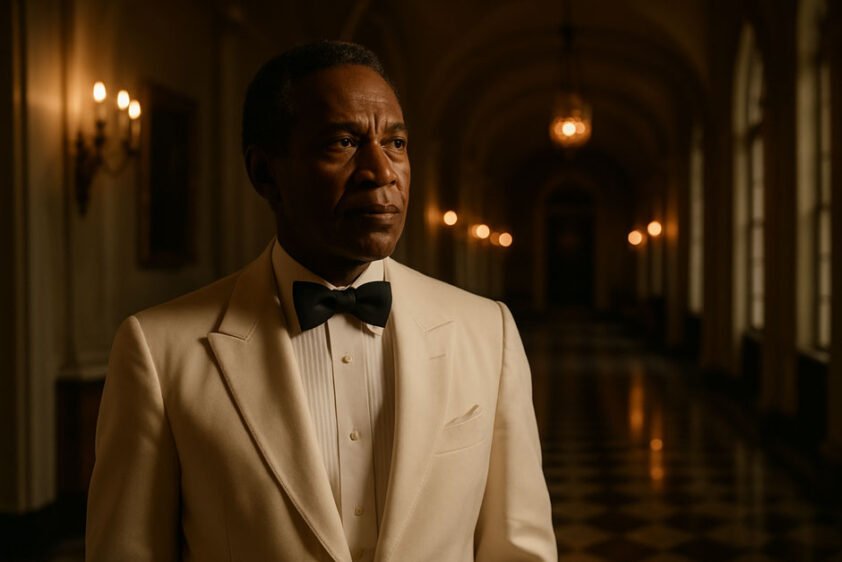
Introduction: The Man Who Watched History Unfold
“Lee Daniels’ The Butler” is a powerful and sweeping cinematic experience that uses one man’s life to chart the course of American history and the struggle for civil rights. The film introduces us to Cecil Gaines, a fictional character whose journey begins in the segregated South and culminates in the White House.
Cecil’s life is a study in contrasts, a quiet existence spent in the background of immense political and social upheaval. He serves as a butler to eight different U.S. presidents, witnessing the most pivotal moments of the 20th century from a unique, often unseen, vantage point.
The narrative skillfully weaves together Cecil’s personal life—his family, his ambitions, and his quiet dignity—with the grand, turbulent history of the Civil Rights Movement. This dual focus gives the film its emotional depth and historical resonance.
The Historical Tapestry: Serving Presidents and Witnessing Change
From Plantation to the White House
Cecil Gaines’s story is rooted in the brutal realities of the Jim Crow South. His early life on a cotton plantation is marked by tragedy and injustice, experiences that shape his philosophy of survival: be invisible, be impeccable, and serve without question.
This philosophy of quiet service eventually leads him to the ultimate stage of American power: the White House. Here, he moves through the halls of power, a silent fixture during administrations from Dwight D. Eisenhower to Ronald Reagan.
A Silent Witness
As a White House butler, Cecil is a non-political observer, a man whose job is to maintain order and decorum while the world outside, and sometimes inside, is in chaos. He witnesses the private moments and public pressures that define each presidency.
The film subtly contrasts the varying attitudes of the presidents towards the burgeoning Civil Rights Movement. From the cautious steps of Eisenhower to the legislative battles under Johnson, Cecil’s presence underscores the slow, often painful, march toward equality.
The Personal Struggle: Family, Conflict, and the Civil Rights Movement
The Father-Son Divide
The heart of the film’s emotional conflict lies in the relationship between Cecil and his eldest son, Louis. Their opposing views on how to achieve racial justice create a profound and painful rift within the Gaines family.
Cecil believes in quiet, dignified service and working within the system, a strategy born of his own survival. Louis, however, is drawn to the radical, direct action of the burgeoning Civil Rights Movement, viewing his father’s submission as complicity.
Louis Gaines and the March for Equality
Louis Gaines becomes a living embodiment of the era’s activism. His journey takes him from the non-violent protests of the Freedom Riders and sit-ins to the more militant stance of the Black Panther movement.
This tension between father and son highlights the generational divide in the fight for civil rights. It forces the audience to consider the validity of both approaches: the quiet, incremental change achieved through respectability, and the loud, revolutionary demands for immediate justice.
Fact vs. Fiction: The Inspiration Behind the Story
The Real-Life Eugene Allen
While Cecil Gaines is a fictional character, his story is loosely inspired by the life of Eugene Allen, a real White House butler who served for 34 years. Allen’s quiet dedication and long tenure provided the historical framework for the film.
However, the filmmakers took significant creative liberties to craft a more dramatic and thematically rich narrative. Cecil’s family, his tragic backstory, and the intense conflict with his activist son Louis were all fictionalized elements.
The film’s purpose was not to create a documentary but to use a personal, fictionalized lens to illustrate the broader historical truth of the African American experience in the 20th century. The dramatic conflicts serve to humanize the era’s political struggles.
Critical Reception and Lasting Impact
A Star-Studded Ensemble
The film’s success was greatly bolstered by its exceptional, star-studded cast. Forest Whitaker delivers a deeply moving performance as Cecil Gaines, capturing the character’s quiet strength and internal turmoil.
Oprah Winfrey, in a rare film role, is equally compelling as Cecil’s wife, Gloria, whose own struggles with the pressures of her husband’s demanding job add another layer of complexity to the family drama.
The film was both a critical and commercial success, resonating with audiences for its emotional power and its accessible presentation of complex historical issues. It sparked important conversations about race, service, and the American Dream.
Conclusion: The Enduring Dignity of Service
“Lee Daniels’ The Butler” is more than just a historical drama; it is a testament to the enduring dignity of service and the complex, often contradictory, paths to freedom. Cecil Gaines’s journey from the cotton fields to the White House is a powerful metaphor for the progress of a nation.
The film ultimately celebrates the quiet resilience of those who served in the background, whose daily acts of professionalism and survival paved the way for future generations. It leaves the audience with a profound appreciation for the long, hard-fought battle for equality, culminating in the symbolic moment of a Black man serving a Black president.