

Introduction: What Exactly is a Kameez Kameez?
Is there any piece of clothing that so perfectly captures the history, modesty, and vibrant style of South Asia as the ubiquitous kameez kameez?
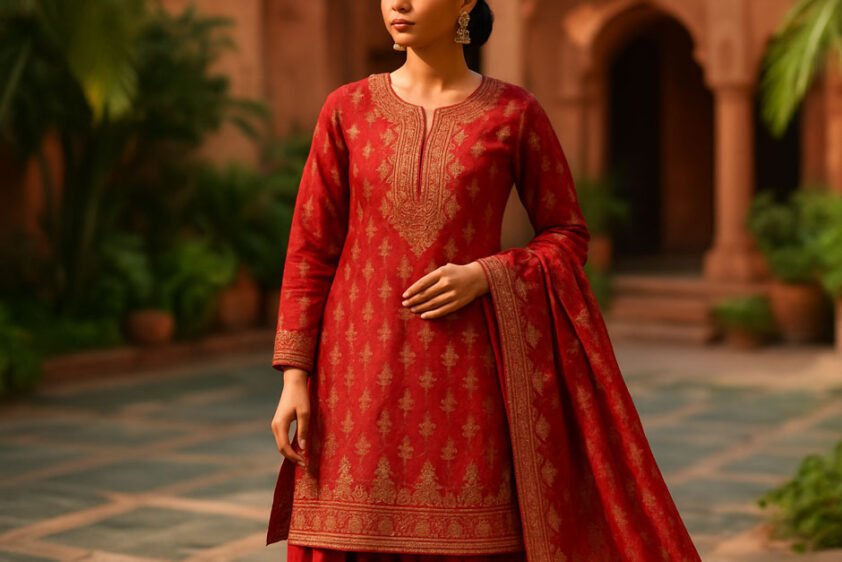
While the phrase itself is a slight redundancy, the kameez is the heart of the ensemble—the long, flowing tunic that defines the upper half of the traditional attire.
This single garment has gracefully crossed borders and generations, establishing itself as a beloved staple for daily wear and a canvas for high fashion across the subcontinent and the global diaspora.
Defining the Garment: More Than Just a Tunic
The complete traditional outfit is formally recognized as the Salwar Kameez or Shalwar Kameez, which pairs the tunic (kameez) with loose-fitting trousers (salwar) and a scarf (dupatta).
A classic kameez is cut long, often extending to the knees, and features side seams left open below the waist to ensure comfort and a beautiful, unhindered drape.
Its simple yet brilliant design allows for an infinite array of variations in fabric, cut, and ornamentation, making it equally appropriate for a casual afternoon or a grand wedding celebration.
A Journey Through Time: The History of the Salwar Kameez
The story of this iconic dress is deeply interwoven with the region’s past, a rich narrative of cultural exchange that stretches back over many centuries.
It is a compelling tale of migration, imperial influence, and cultural fusion that has firmly secured the garment’s place in the world of fashion.
Mughal Roots and Central Asian Origins
Most historical accounts credit the introduction of the salwar and kameez to the Indian subcontinent to the powerful Mughal Empire in the 16th century.
The style was originally favored by the Turkic-Iranian nomadic peoples of Central Asia, who required practical, loose-fitting clothing that allowed for easy movement while riding horses.
Once adopted by the Mughals, the attire was quickly refined and elevated, transforming into a sophisticated symbol of courtly status and royal elegance.
Evolution Across the Indian Subcontinent
As the style spread, it was enthusiastically embraced by various local communities, particularly flourishing in the Punjab region of Northwest India and what is now Eastern Pakistan.
It rapidly evolved from a purely functional piece into a vibrant fashion statement, with each region developing its own unique variations in silhouette, embroidery techniques, and preferred textiles.
Today, the Salwar Kameez remains a powerful cultural marker, serving as the national dress of Pakistan and being widely worn by both women and men across India, Bangladesh, and Afghanistan.
Anatomy of an Icon: The Three Key Components
To truly appreciate the kameez kameez, one must understand the distinct function and aesthetic contribution of each of its three primary elements.
Each piece works in harmony to create an ensemble that is both functional and aesthetically pleasing, resulting in a look that is balanced and inherently graceful.
The Kameez: The Heart of the Outfit
The kameez is undoubtedly the centerpiece, a long shirt or tunic whose length can range dramatically from mid-thigh to well below the knee.
While the traditional cut is straight, contemporary designers frequently experiment with flares, high-low hemlines, or dramatic slits for a more modern sensibility.
The neckline, cuffs, and hem are often the focal points for exquisite hand-embroidery, beadwork, or detailed printing, serving as a showcase for the artisan’s skill.
The Salwar: Comfort Meets Style
The salwar, or shalwar, is the essential loose-fitting trouser, characterized by its wide cut at the waist that gently tapers down to a gathered or cuffed ankle.
This generous cut is the secret to its unparalleled comfort and inherent modesty, making it perfectly suited for the warm, often humid climates of South Asia.
Modern interpretations have given rise to popular styles like the figure-hugging churidar, the wide-legged palazzo, and the sleek, straight-cut cigarette pant.
The Dupatta: The Finishing Touch
The dupatta is a long, rectangular piece of fabric that is elegantly draped over the shoulders or sometimes used to cover the head, fulfilling both a decorative and a modest role.
It introduces a crucial layer of color, texture, and dynamic movement to the overall look, often providing a striking contrast to the main colors of the kameez and salwar.
For more formal occasions, the dupatta is frequently crafted from luxurious materials like silk or chiffon and adorned with heavy, shimmering embroidery.
Styles for Every Occasion: Exploring Kameez Variations
The remarkable longevity and widespread appeal of the kameez kameez can be attributed to its incredible adaptability and the sheer diversity of available styles.
Fashion designers continue to reimagine and refresh the classic silhouette, ensuring its ongoing relevance in the fast-paced world of global fashion.
From Anarkali to Straight Cut: A Style Guide
The Anarkali suit is perhaps the most visually striking variation, featuring a long, frock-style top that dramatically flares out from the waist, resembling a Western gown.
In sharp contrast, the Straight Cut suit offers a clean, understated, and minimalist aesthetic, using vertical lines to create a sleek and modern appearance.
Other beloved regional styles include the voluminous Patiala (with its characteristic heavily pleated salwars), the elegant Sharara (featuring wide, flared trousers), and the simple A-line cut.
The Kameez Kameez in Modern Fashion
This traditional attire is no longer confined to cultural festivals or regional boundaries; it has successfully transitioned into a recognized global fashion phenomenon.
Its unique combination of comfort, timeless elegance, and deep cultural heritage resonates powerfully with a diverse international audience.
Global Appeal and Contemporary Trends
Contemporary fashion designers, both Eastern and Western, frequently draw deep inspiration from the kameez and its components, skillfully integrating these elements into modern silhouettes.
The tunic is now commonly seen paired with Western items like jeans or leggings, a testament to its incredible versatility as a standalone piece of clothing.
This continuous cross-cultural dialogue ensures that the kameez kameez remains a dynamic, evolving, and highly influential part of the global fashion landscape.
Frequently Asked Questions (FAQ)
Q: What is the difference between a Salwar and a Kameez?
The kameez is the long shirt or tunic worn on the upper body, while the salwar is the loose-fitting trouser worn on the lower body. They are traditionally worn together as a complete ensemble.
Q: Is the Salwar Kameez only worn by women?
No, while it is predominantly worn by women today, the original attire was historically worn by both men and women. A version of the kameez is still commonly worn by men, often referred to as a Kurta.
Q: What are the most popular fabrics for a Kameez?
Fabric choice depends on the season and event. Light materials like cotton and linen are favored for daily wear, while luxurious fabrics such as silk, georgette, chiffon, and velvet are reserved for formal occasions.
Q: How should a Kameez be cared for?
Care instructions are highly dependent on the fabric and any embellishments. Simple cotton kameez can usually be machine-washed, but delicate pieces with heavy embroidery or fine silk should always be dry cleaned or gently hand-washed.