

No one wants to be jolted awake at 3 a.m. by a relentless, high-pitched chirp. That unmistakable sound is more than just an annoyance; it’s a critical alert from your smoke detector, the unsung hero of home safety. While the detector itself is crucial, the fire smoke detector battery powering it is the true heart of the operation, ensuring your family is protected around the clock.
This guide will walk you through everything you need to know about your smoke alarm battery. From choosing the right type to knowing the tell-tale signs for a replacement, you’ll gain the confidence to keep your home’s first line of defense in perfect working order.
Why Your Smoke Detector Battery is a Lifesaver
Think of your smoke detector as an unseen guardian, silently watching over your home. The battery is its lifeblood, ensuring it remains vigilant even when the power goes out. A fire can double in size every minute, making an early warning absolutely essential for a safe escape.
According to the National Fire Protection Association (NFPA), a staggering three out of five home fire deaths occur in properties without working smoke alarms. A leading cause of these failures is a missing or disconnected battery. This simple component makes the difference between a minor incident and a devastating tragedy.
Decoding the Types of Smoke Detector Batteries
Not all smoke detector batteries are created equal. The right choice depends on your specific alarm model, your budget, and how often you’re willing to perform maintenance. Here’s a breakdown of the most common types you’ll encounter.
The Traditional 9V Battery
For many years, the rectangular 9V battery was the standard for smoke alarms. It is still widely used and easy to find in most stores. These batteries are affordable and simple to replace.
However, their main drawback is a shorter lifespan. You can expect a standard alkaline 9V battery to last between six and twelve months, meaning it requires at least annual replacement.
The Common AA Battery
Many modern smoke detectors have shifted to using AA batteries. These alarms typically require two or three AA cells, which collectively offer more energy than a single 9V battery.
This increased power capacity often translates to a longer lifespan, usually around 12 to 18 months. While still requiring regular changes, they offer a slight advantage in longevity over their 9V counterparts.
The Long-Life Lithium Battery
If you prefer a “set it and forget it” approach, lithium batteries are the premium choice. Some detectors come with replaceable lithium batteries that can last five years or more.
Even better are the modern smoke alarms that come with a sealed 10-year lithium battery. These units are designed to last the entire decade-long lifespan of the alarm itself, completely eliminating the need for battery changes.
The High-Performance CR123A Battery
For more advanced systems, such as interconnected or smart smoke alarms, you might find CR123A batteries. These are powerful lithium cells known for their stable voltage and reliability.
A CR123A battery typically powers a detector for three to five years. They are essential for devices that draw more power due to features like wireless connectivity.
Key Signs It’s Time for a Fire Smoke Detector Battery Change
Thankfully, your smoke detector won’t leave you guessing when its power is running low. These devices are designed to provide clear, audible warnings long before the battery dies completely, giving you ample time to address it.
The Persistent Chirp
The most common and universally recognized signal is the single, high-pitched chirp that occurs every 30 to 60 seconds. This sound is specifically designed to be distinct from the loud, continuous alarm that signals a fire.
If you hear this persistent chirping, it’s a direct message: the battery is weak and needs to be replaced as soon as possible. Never ignore this sound or, even worse, remove the battery without replacing it.
The Proactive Replacement Schedule
Even without a chirp, it’s wise to be proactive. For alarms using alkaline batteries (both 9V and AA), a best practice is to replace them at least once a year, regardless of whether they are chirping.
A popular and easy-to-remember trick is to change your smoke alarm batteries every time you change your clocks for Daylight Saving Time. This biannual habit ensures your detectors always have fresh power.
End-of-Life Warnings
It’s important to know that both the alarm and its battery have a finite lifespan. Smoke alarms with sealed 10-year batteries have a different kind of alert to signal their retirement.
After a decade of service, these units will typically emit a more frequent chirping pattern or use a voice alert to announce that the entire alarm needs to be replaced. This is a safety feature indicating the sensor itself is no longer reliable.
How to Replace Your Smoke Detector Battery: A Simple Guide
Changing a smoke detector battery is a straightforward task that anyone can do in just a few minutes. For most standard, battery-powered alarms, the process is simple and requires no special tools.
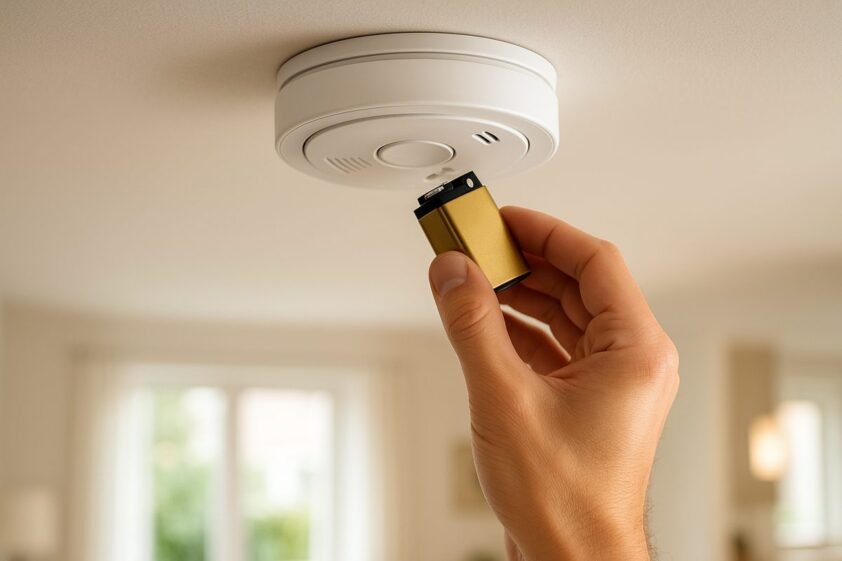
First, gently twist or slide the smoke detector to detach it from its mounting bracket on the ceiling or wall. Once it’s free, look for the battery compartment, which is usually easy to access on the back or side of the unit.
Next, open the cover and remove the old battery. Insert the new one, making sure to match the positive (+) and negative (-) terminals correctly. An incorrectly installed battery will not power the device.
Before reattaching the detector, press and hold the test button for a few seconds. The alarm should sound, confirming that the new battery is working. Once confirmed, secure the detector back onto its mounting bracket.
Choosing the Best Battery for Your Needs
When it comes time to purchase a new battery, making a smart choice is about more than just finding the right size. The quality and type of battery you select play a significant role in the long-term reliability of your smoke alarm.
Reliability Over Price
While it can be tempting to opt for the cheapest off-brand batteries, this is one area where it pays to invest in quality. Always choose batteries from reputable, well-known brands to ensure consistent performance and avoid premature failure.
Cheaper batteries are more prone to leaking, which can damage the internal components of your smoke detector and render it useless. A few extra cents for a trusted brand is a small price to pay for safety.
The Value of Sealed 10-Year Alarms
For ultimate peace of mind, consider upgrading to a smoke alarm with a sealed 10-year lithium battery. Although the upfront cost is higher, these units provide a decade of maintenance-free protection.
This eliminates the need for annual battery changes and the risk of forgetting. It’s a hassle-free solution that ensures your alarm is always ready to respond in an emergency.
Essential Maintenance for Peak Performance
A fresh battery is the most critical component of a working smoke detector, but a little routine maintenance ensures the entire unit functions correctly. These simple habits can significantly improve your alarm’s reliability and prevent frustrating false alarms.
Test Monthly, Replace Annually
Get into the habit of pressing the test button on each of your smoke detectors at least once a month. This quick check confirms that the battery, electronics, and siren are all working in harmony. For alarms with standard alkaline batteries, remember the golden rule: test monthly, and replace the battery annually.
Keep It Clean
Dust, cobwebs, and even insects can accumulate in the vents of your smoke detector over time. This buildup can obstruct the sensor, either preventing it from detecting smoke or, more commonly, causing it to trigger false alarms. Once or twice a year, use the soft brush attachment on your vacuum cleaner to gently clean the outside of the unit.
A Small Task with Life-Saving Importance
Your smoke detector is a simple device, but its impact on your family’s safety is profound. Understanding its battery—knowing the right type, recognizing the warning signs, and performing regular maintenance—is a fundamental part of responsible homeownership.
By investing just a few minutes each month to test your alarms and a few more each year to replace the batteries, you ensure that your silent guardians are always prepared. It’s a small task that carries life-saving importance, providing you with the peace of mind that your home is protected.