

The World of Da Xuan: Decay, Destiny, and the Martial Path
A Dynasty in Decline
The acclaimed xianxia novel, Da Xuan Martial Saint by Night Wind Listener, plunges readers into a world defined by profound historical weariness. It is a setting where a thousand-year dynasty, once a symbol of unshakeable power, now faces the inevitable decay of time.
This setting immediately establishes a central theme: the transience of all things, even the grandest of human institutions. The novel posits a philosophical question to the reader: what, if anything, can truly last forever in a cycle of rise and ruin?
The noble families, who have enjoyed centuries of prestige, are also shown to be returning to dust. This sense of historical entropy creates a fertile ground for the emergence of a protagonist who seeks a more enduring truth.
The Martial Arts Will
The answer to the world’s decay, as presented in the novel, lies in the pursuit of the ultimate martial path. The core conflict is not merely political or territorial, but a spiritual and physical quest for permanence.
The ultimate goal is often described in two parts: to forge an “Immortal Body, tempered a thousand times,” or to achieve a supreme “Martial Arts will, in Heart Unity with heaven and earth.” These are not just aspirations; they represent the pinnacle of power and a defiant rejection of the natural order of decline.
This pursuit is the engine of the story, driving the protagonist to constantly challenge his limits and the established hierarchy of the world. It is the only way to escape the fate of becoming mere dust in the yellow sand of history.
Chen Mu: The Sword-Wielding Protagonist
Arrival and Ambition
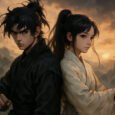
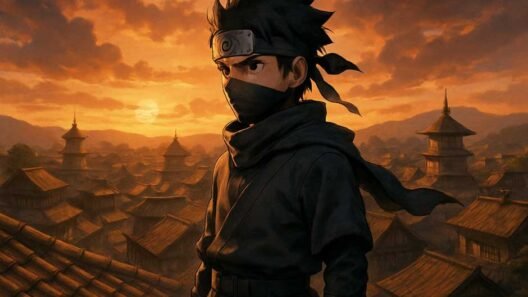
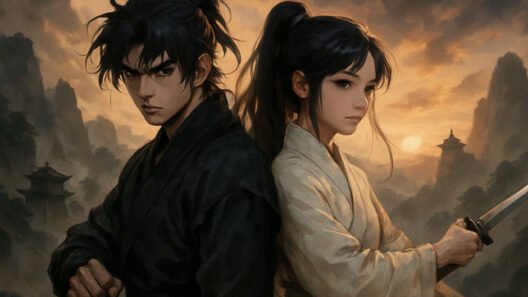
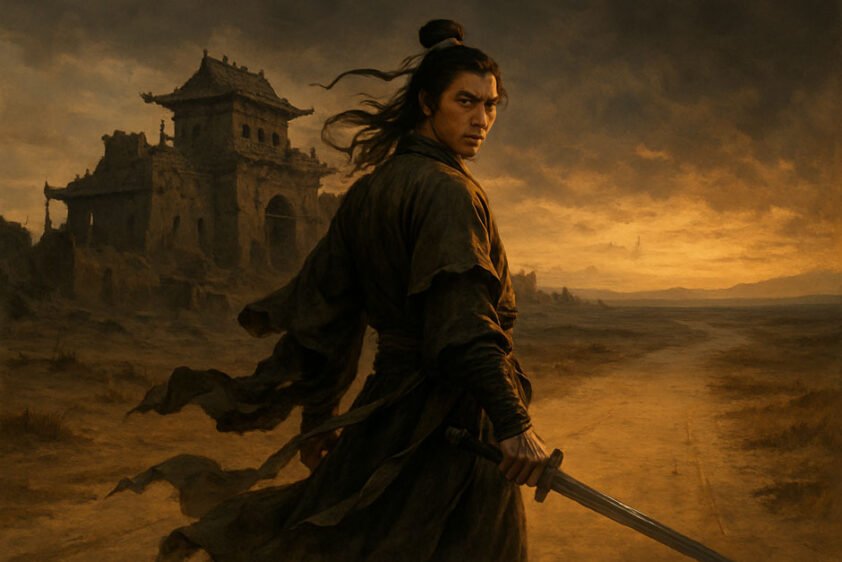
The main character, Chen Mu, is the novel’s anchor, introduced as a figure of singular focus and immense potential. He arrives in this tumultuous world with a sword in hand, a classic image of a martial artist ready to carve his own destiny.
His ambition is not simply to survive, but to master the martial way to an extent that transcends the limitations of his era. He is the embodiment of the novel’s central theme—the individual’s struggle against the vast, indifferent march of time.
Chen Mu’s journey is a relentless ascent, marked by a clear-eyed understanding of the world’s harsh realities. He is a pragmatic hero, whose actions are driven by the singular goal of achieving the eternal.
The Path of the Sword
Chen Mu’s primary method of cultivation and combat is centered on the sword. This choice is significant, often symbolizing a direct, unyielding, and pure approach to the martial arts.
His sword is not just a weapon; it is an extension of his will and his philosophy. It is the tool with which he confronts the decaying world and the countless adversaries who stand in his way.
The narrative often focuses on the mastery and refinement of his sword techniques, illustrating the meticulous dedication required to reach the peak of the martial way. His path is one of constant tempering and unceasing progress.
Beyond the Tropes: Wealth, Status, and Cultivation
The System of Power
What sets Da Xuan Martial Saint apart from many standard xianxia novels is its unusually explicit and almost cynical take on the role of wealth and social status in cultivation success. It presents a starkly realistic view of the power system.
The novel suggests that “might makes right” is not just about innate talent, but about the vast resources required to nurture that talent. Cultivation is expensive, and those from influential families have a massive, systemic advantage.
This thematic element is highlighted in scenes where Chen Mu, as his own status rises, spends enormous sums to ensure his relatives, such as his little sister, can keep pace with their more privileged peers. The novel turns a common trope into a commentary on class and power.
Redefining “Celestial Beauty”
Another subtle yet impactful commentary is the novel’s approach to the common “celestial beauty” trope. Instead of focusing solely on physical appearance, the narrative often links a woman’s “beauty” to her lineage and status.
This perspective suggests that in the world of Da Xuan, high status and power are themselves a form of beauty, or at least a prerequisite for the kind of refined existence that allows for such an appearance. It is a beauty born of privilege and resources, a subtle but sharp critique of the genre’s tropes.
By framing it this way, the novel offers a thought-provoking explanation for why the protagonist constantly encounters stunning women from powerful backgrounds. As Chen Mu’s own status increases, his circle naturally includes the elite of the world.
The Legacy of Dust: Heroes, Demons, and the Enduring Journey
Confronting the Millennium-Old
Chen Mu’s journey is fraught with danger, forcing him to confront a wide array of powerful adversaries. These include not only the ambitious “heroes” of his time but also “millennium-old Demons” and ancient entities.
The scale of the conflict is immense, spanning across generations and challenging the very foundations of the world. Each battle is a test of Chen Mu’s martial will against the accumulated power of history.
The narrative uses these confrontations to demonstrate the protagonist’s growing strength and his unwavering commitment to his path. He is the force that breaks the cycle of decay, one powerful enemy at a time.
The Road Paved with Yellow Sand
The novel leaves us with a final, poignant image: Chen Mu standing alone, looking back at a road “paved with yellow sand.” Countless heroes and demons, all who sought power and glory, have been reduced to dust.
This powerful conclusion reinforces the central message: the pursuit of the eternal martial way is a solitary one. Only Chen Mu, the Da Xuan Martial Saint, remains, having achieved a form of permanence that the dynasty and the noble families could not.
His legacy is not one of political power or familial wealth, but of an unyielding will that conquered the transient nature of the world. The novel is ultimately a meditation on endurance, ambition, and the true meaning of immortality.