As the final candle of the menorah is kindled, casting a warm and hopeful glow, many find themselves wondering about the exact moment the celebration of Hanukkah concludes. It’s a question that comes up whether you’re coordinating family gatherings or are simply drawn to the beauty of this ancient festival. The answer isn’t just a simple date on the calendar; it’s woven into the very fabric of Jewish tradition and the rhythms of a lunar calendar.
The Final Sunset: Pinpointing When Hanukkah Ends
For those looking toward the upcoming holiday, the final moments of Hanukkah in 2025 will arrive at nightfall on Monday, December 22nd. This marks the end of the eight-day Festival of Lights, which kicks off at sundown on Sunday, December 14th. This is the time to savor the last of the holiday’s special foods and enjoy the sight of a fully lit menorah, a beacon of warmth in the winter darkness.
In Jewish practice, a new day doesn’t begin at the stroke of midnight but rather at sunset. This is a crucial detail for understanding Hanukkah’s schedule. While it’s celebrated for eight full days, the holiday technically stretches across nine calendar days. Each day of Hanukkah begins as the sun goes down and officially ends at the following sundown, a cycle that guides the entire celebration from its first light to its last.
Counting the Nights: The Story Behind the Eight Days
The eight-day length of Hanukkah is what defines it, a tradition deeply rooted in a powerful story of faith and resilience. The most famous explanation is found in the Talmud, which tells the story of a miracle that occurred centuries ago.
After a small group of Jewish warriors, known as the Maccabees, reclaimed the Holy Temple in Jerusalem from their oppressors, they wanted to rededicate it by lighting the Temple’s menorah. They found only a single, small flask of pure olive oil—enough to last for just one day. In an act of faith, they lit the menorah, and miraculously, the oil burned for eight full days, the exact amount of time needed to prepare a new, consecrated supply. This event is why Hanukkah is celebrated for eight days.
There is also another, less-known perspective that suggests the first Hanukkah was a postponed celebration of Sukkot, an eight-day harvest festival. Since the Maccabees were at war, they couldn’t observe Sukkot at its proper time. After their victory, they marked the missed holiday, which then evolved into the celebration we know as Hanukkah today.
A Date That Dances: Why Hanukkah’s End Varies
If you follow the Gregorian calendar, you’ve likely noticed that Hanukkah’s dates shift each year. One year it might be in early December, and the next it could be closer to the new year. This is because Hanukkah’s timing is set by the Hebrew calendar, a lunisolar system that doesn’t perfectly align with the solar-based Gregorian calendar.
Hanukkah always begins on the 25th day of the Hebrew month of Kislev. To ensure the lunar-based holidays stay in their correct seasons, the Hebrew calendar occasionally adds a leap month. This intricate system means that while the Hebrew date for Hanukkah is fixed, its Gregorian date will always vary.
The festival concludes on either the second or third day of the following month, Tevet, depending on whether Kislev has 29 or 30 days in that particular year. It’s a small detail, but one that adds to the unique character of the holiday’s timing.
The Grand Finale: How the Last Night of Hanukkah is Celebrated
The eighth and final night of Hanukkah is a truly special occasion, a culmination of the festival’s themes of hope, light, and endurance. It’s a time when families and friends gather to mark the end of the holiday with joy and reflection.
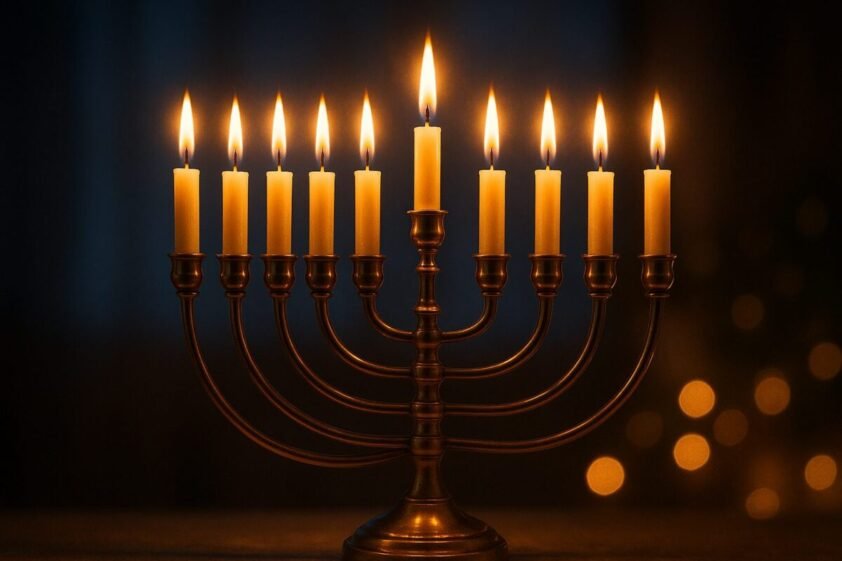
On this last night, the menorah is a beautiful sight to behold, fully ablaze with all eight candles, plus the shammash, or helper candle. This radiant display symbolizes the completeness of the miracle and the ultimate triumph of light over darkness. As the blessings are recited and the candles glow, it serves as a powerful and poignant reminder of the holiday’s enduring story.
Of course, no Hanukkah celebration is complete without its traditional foods. The final evening is one last chance to indulge in delicious treats fried in oil, like crispy potato latkes served with applesauce or sour cream, and sweet, jelly-filled doughnuts known as sufganiyot. Many families also take this opportunity to exchange small gifts, play another round of the dreidel game, and simply enjoy being together, creating cherished memories.
Zot Hanukkah: The Special Meaning of the Eighth Day
The final day of Hanukkah has its own unique name: Zot Hanukkah, which translates to “This is Hanukkah.” The name is taken from a verse read in the synagogue on this day, which speaks of the dedication of the altar. This day carries a special spiritual weight, offering a final moment for reflection and connection to the holiday’s deeper themes.
Zot Hanukkah is seen as the ultimate expression of the holiday’s theme of dedication. It’s a time to not only remember the rededication of the ancient Temple but also to reflect on our own personal commitments to our values and beliefs. The brilliant light of the fully-kindled menorah becomes a powerful symbol of this personal and communal dedication.
In some mystical Jewish traditions, the eighth day of Hanukkah is considered the final “seal” of the High Holiday season, which includes Rosh Hashanah and Yom Kippur. It is seen as a day of profound spiritual importance, a time when prayers are thought to be especially potent. You might even hear the greeting Gmar chatimah tovah, typically used on Yom Kippur, which means “May you be sealed totally for good.”
Planning Ahead: Future Hanukkah End Dates
For those who like to mark their calendars in advance, here are the end dates for Hanukkah for the next few years:
| Year | End Date (at nightfall) |
|---|---|
| 2026 | Saturday, December 12 |
| 2027 | Saturday, January 1, 2028 |
| 2028 | Wednesday, December 20 |
| 2029 | Monday, December 10 |
Common Questions About When Hanukkah Ends
Is work allowed on the last day of Hanukkah?
Yes, for the most part. Hanukkah is considered a “minor” holiday in that it doesn’t have the same restrictions on work as major holidays like Yom Kippur or Passover. The only exception would be if the last day of Hanukkah falls on Shabbat (Saturday), the weekly day of rest. Otherwise, normal daily activities are permitted.
Is there a special greeting for the last day?
While a simple “Happy Hanukkah” or the Hebrew Chag Sameach (Happy Holiday) is always welcome, on the last day, you might also hear the more specific greeting Gmar chatimah tovah. This reflects the deeper spiritual significance of the day as a final echo of the High Holiday season.