
Concrete is the foundation of modern construction, prized for its strength and longevity. From driveways and patios to basement floors, its durability is unmatched. However, its porous nature means it isn’t immune to dirt, grime, and stubborn stains.
Proper cleaning not only restores your concrete’s appearance but also extends its life and ensures it remains a safe, non-slip surface. This guide provides a comprehensive approach to keeping your concrete surfaces in pristine condition.
Why Bother with Concrete Cleaning?
Over time, concrete can accumulate a variety of blemishes. Mold and mildew create slippery, unsafe conditions, while oil and rust stains detract from your property’s curb appeal. Regular cleaning is a small investment that pays dividends in both aesthetics and safety.
A clean surface is also crucial for maintenance. Before applying a protective sealer or performing any repairs, the concrete must be free of contaminants to ensure a proper bond and a professional finish.
Essential Tools for the Job
Having the right equipment makes all the difference. For most outdoor jobs, a pressure washer is your most powerful ally. For scrubbing away tough spots, a stiff nylon brush is essential—avoid wire brushes, as they can scratch and damage the concrete.
You’ll also need a good cleaning solution. This can range from a simple mix of household laundry detergent and water to specialized concrete cleaners and degreasers. For safety, always have chemical-resistant gloves and safety goggles on hand.
Your Step-by-Step General Concrete Cleaning Method
Preparation is Key
Before you begin, clear the area of any furniture, planters, or vehicles. Use a broom or leaf blower to remove all loose dirt and debris. This prevents you from simply spreading the dirt around during the cleaning process.
If you’re working on a patio or walkway, take a moment to pull any weeds that have sprouted through cracks. This ensures a more thorough and longer-lasting clean.
The Cleaning Process
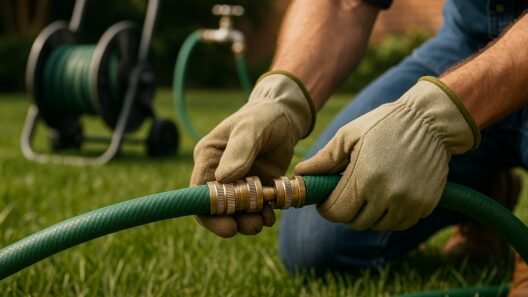
Start by wetting the entire concrete surface with a hose. This helps the cleaning solution penetrate without drying out too quickly. Apply your chosen cleaner and let it sit for 10-15 minutes to break down the grime.
Next, use your stiff nylon brush to scrub the surface in circular motions, paying extra attention to any stained areas. Once you’ve thoroughly scrubbed the concrete, rinse it completely with your hose, ensuring no soapy residue is left behind.
The Power of Pressure Washing
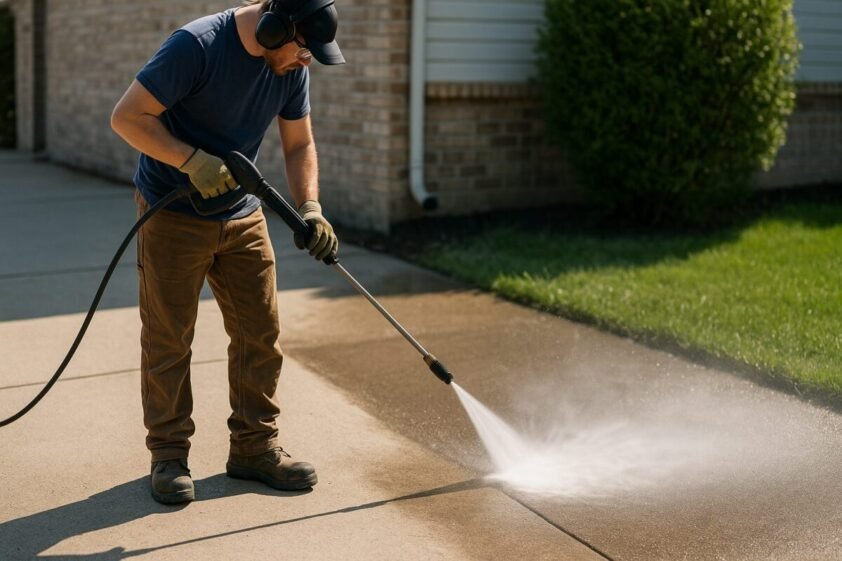
For large outdoor surfaces like driveways and patios, a pressure washer is the most efficient tool. It can blast away months of built-up dirt and grime in a fraction of the time it would take to scrub by hand.
Always start with a low-pressure setting and a wide-angle nozzle to avoid damaging the concrete. Hold the nozzle at a consistent distance from the surface and move in long, sweeping strokes for an even, streak-free finish.
How to Tackle Stubborn Concrete Stains
Some stains require a more targeted approach. Here’s how to handle the most common culprits.
Battling Oil and Grease
Fresh oil spills should be addressed immediately. Cover the stain with an absorbent material like kitty litter, sawdust, or baking soda. Let it sit for a few hours to soak up as much oil as possible, then sweep it away.
For any remaining stain, apply a commercial degreaser or a paste of powdered laundry detergent and water. Scrub vigorously with your nylon brush and rinse thoroughly.
Erasing Rust Marks
Rust stains, often left by metal patio furniture or tools, can be particularly unsightly. For a natural approach, pour white vinegar directly onto the stain, let it sit for about 20 minutes, and then scrub.
If the stain persists, a commercial rust remover specifically designed for concrete will be more effective. These are typically acid-based, so follow the manufacturer’s safety instructions carefully.
Eliminating Mold and Mildew
Mold and mildew thrive in damp, shady areas. For outdoor surfaces, a solution of one part bleach to ten parts water is highly effective. Apply it, scrub the area, and rinse well.
When dealing with mold indoors, such as in a basement, proper ventilation is critical. Never sweep dry mold, as this will release spores into the air. Instead, spray the area with a mold-killing detergent, scrub, and wipe clean with a damp mop.
Keeping Your Concrete Pristine
Once your concrete is clean, a few simple habits can keep it looking great. Regular sweeping prevents dirt from setting in, and cleaning up spills as soon as they happen is the best defense against staining.
For the ultimate protection, consider applying a concrete sealer. A good sealer creates an invisible barrier that repels water, oil, and other contaminants, making future cleanups significantly easier and extending the life of your concrete.
A Clean Finish
With the right techniques and a little bit of effort, you can restore even the most neglected concrete to its original condition. Regular cleaning and maintenance not only enhance your property’s appearance but also preserve the value and integrity of your investment for years to come.