
The name Elizabeth Moore resonates across different eras and fields of achievement. From the tennis courts of the early 20th century to the laboratories of Bell Labs, from the halls of the Gates Foundation to the pages of contemporary spiritual literature, women bearing this name have left indelible marks on history. This is the story of their remarkable legacies.
A Name Etched in History
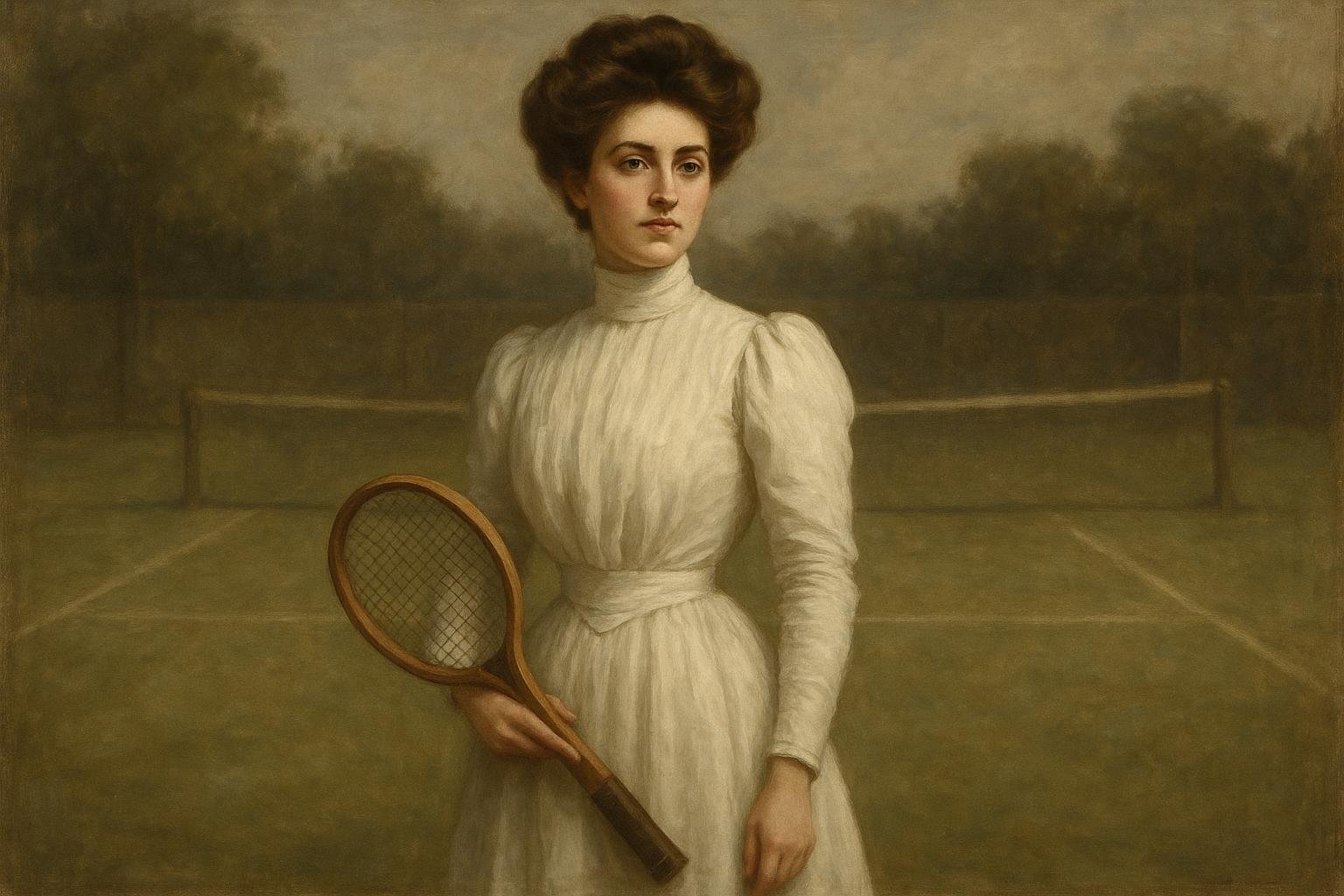
Elisabeth “Bessie” Holmes Moore stands as one of the most formidable figures in early American tennis. Born at a time when women’s participation in competitive sports was still controversial, she defied convention and established herself as a champion whose influence would echo through generations.
Her story is one of determination, talent, and an unwavering commitment to excellence. Through her achievements on the court, she not only won championships but also helped to legitimize women’s athletics in an era of profound social change.
The Making of a Champion: Early Life and Rise in Tennis
Born in Brooklyn, New York, on March 5, 1876, Elisabeth Holmes Moore, affectionately known as “Bessie,” grew up in a world of privilege and expectation. Her father, George Edward Moore, was a prosperous cotton broker, and she was raised and schooled in the affluent community of Ridgewood, New Jersey.
It was here, at the age of 12, that she first picked up a tennis racket, a decision that would set the course for the rest of her life. A natural athlete with a fierce competitive spirit, Moore quickly distinguished herself as a rising star in the nascent world of American tennis.
Her talent was undeniable. By 1892, at the tender age of 16, she reached her first U.S. National Championships singles final. In a grueling five-set match, a historic first for women’s tennis, she was narrowly defeated by the Irish champion Mabel Cahill. This early taste of high-stakes competition only fueled her ambition.
A Rivalry for the Ages: Moore vs. Atkinson
As the 19th century drew to a close, a captivating rivalry emerged between Elisabeth Moore and another formidable American player, Juliette Atkinson. Their on-court battles became the stuff of legend, drawing crowds and elevating the profile of women’s tennis.
These two athletes, with their contrasting styles and unwavering determination, pushed each other to new heights. Their matches were not just displays of athletic prowess but also compelling human dramas, filled with suspense and emotion.
The Moore-Atkinson rivalry was a defining feature of American tennis at the turn of the century. It captured the public’s imagination and helped to solidify the sport’s growing popularity.
Dominating the Court: Four-Time U.S. Champion
Elisabeth Moore’s persistence and dedication paid off handsomely. She would go on to win the U.S. National Championships singles title an incredible four times, in 1896, 1901, 1903, and 1905. These victories cemented her status as one of the most dominant players of her era.
Her game was characterized by a powerful right-handed serve and a versatile one-handed backhand. She was a strategic player, known for her intelligence and her ability to adapt to her opponents’ weaknesses.
In addition to her singles success, Moore also excelled in doubles, winning the U.S. National Championships doubles title twice, in 1896 and 1903, and the mixed doubles title twice, in 1902 and 1904. Her all-around excellence was a testament to her remarkable talent and versatility.
Beyond the Baseline: A Lasting Impact on Women’s Tennis
Elisabeth Moore’s contributions to tennis extended far beyond her impressive collection of trophies. As a pioneering figure in the sport, she helped to break down barriers and pave the way for future generations of female athletes.
Her fierce competitiveness, combined with her grace and sportsmanship, challenged the prevailing stereotypes of women in sports. She proved that women could be both powerful and feminine, and that they belonged on the playing field as much as any man.
In 1971, in recognition of her profound impact on the sport, Elisabeth Moore was inducted into the International Tennis Hall of Fame. It was a fitting tribute to a true pioneer who had left an indelible mark on the world of tennis.
Other Notable Elizabeth Moores: A Legacy of Achievement
The name Elizabeth Moore has been carried by other remarkable women who have made their own significant contributions in various fields. Their stories, while distinct from that of the tennis champion, are no less inspiring.
Betty Shannon: The Mathematician Behind the Scenes
Mary Elizabeth “Betty” Moore Shannon (1922-2017) was a brilliant mathematician who played a crucial, yet often overlooked, role in the development of modern computing. As a researcher at Bell Labs, she was the main collaborator of her husband, Claude Shannon, the “father of the information age.”
In an era when women were rarely credited for their scientific contributions, Betty Shannon’s work was exceptional. She co-authored research on stochastic processes and was instrumental in building some of her husband’s most famous inventions. Her legacy as an “unsung mathematical genius” continues to inspire women in STEM fields today.
Elizabeth Moore of the Gates Foundation: A Modern-Day Education Reformer
In the contemporary era, another Elizabeth Moore is making her mark as a leader in education reform. As the Deputy Director of K-12 Education at the Gates Foundation, she is dedicated to ensuring that all students, particularly those from underserved communities, have access to high-quality math learning experiences.
With a background as a teacher and extensive experience in educational research and development, Elizabeth Moore is a passionate advocate for educational equity. Her work at the Gates Foundation is helping to shape the future of education and empower the next generation of learners.
Elizabeth Moore the Author: Words of Hope and Wholeness
In the world of literature, Elizabeth Moore is a writer and author known for her contemplative and faith-based works. As the co-author of “Liturgies for Hope” and “Liturgies for Wholeness,” she offers readers a source of comfort and inspiration in a chaotic world.
Her writing explores themes of hope, wholeness, and spiritual discovery. Through her simple, beautiful, and raw prose, she invites readers to find meaning and connection in their own lives. Her work is a testament to the power of words to heal, uplift, and transform.
A Life Well-Lived: Final Years and Enduring Memory
After a long and illustrious career, Elisabeth Moore, the tennis champion, retired from the sport she had helped to define. She passed away on January 22, 1959, in Starke, Florida, at the age of 82, from congestive heart failure.
Her legacy, however, lives on. She is remembered not only for her athletic achievements but also for her pioneering spirit and her enduring impact on the world of sports. The story of Elisabeth Moore is a reminder that with talent, determination, and a little bit of courage, it is possible to change the game forever.