
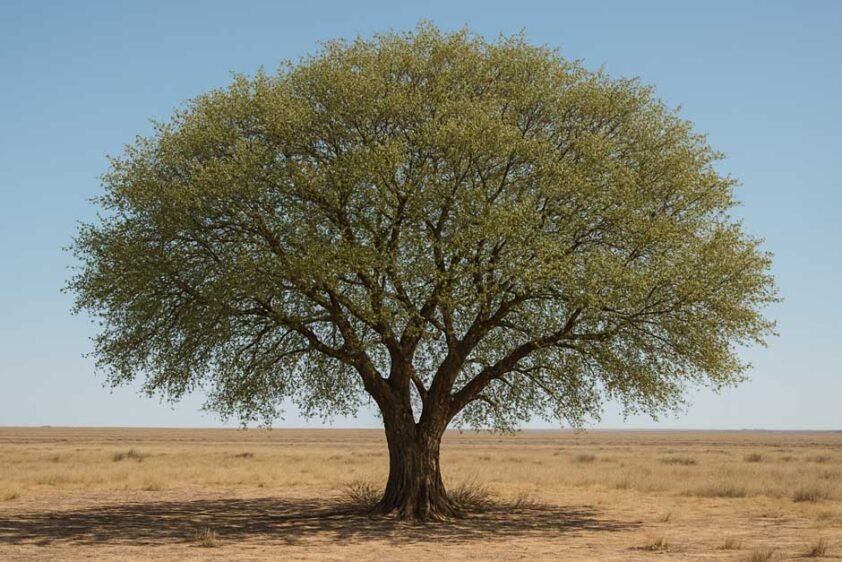
Have you ever encountered a tree that seems to thrive where all others fail, a fast-growing sentinel standing firm against drought, cold, and poor soil? This description perfectly fits the Siberian elm (Ulmus pumila), a species whose very resilience has made it one of the most debated trees in North American and European landscapes.
Originally hailing from Central Asia and Siberia, this deciduous tree was widely introduced across the globe for its hardiness and rapid growth. It was often seen as a quick solution for windbreaks and urban planting in challenging environments.
However, its success story is complicated. While it possesses undeniable survival traits, the tree’s aggressive nature and structural flaws have led many to label it a significant invasive species.
A Profile in Resilience: Characteristics of the Siberian Elm
Physical Description and Growth Habit
The Siberian elm is typically a medium-sized tree, often reaching heights of 30 to 60 feet, though it can grow taller under ideal conditions. It develops an open, rounded crown with slender, somewhat drooping branches.
Its leaves are small, usually less than two inches long, with finely toothed edges and a pointed tip. This small leaf size is one of the features that helps distinguish it from native elms.
The tree is a prolific seed producer, generating large quantities of wind-dispersed, wafer-like seeds called samaras. This massive seed production is key to its rapid spread.
Unmatched Tolerance and Adaptability
One of the primary reasons for the widespread planting of the Siberian elm was its remarkable tolerance to harsh conditions. It is exceptionally cold-hardy, capable of surviving severe winter temperatures.
It also exhibits excellent drought tolerance, making it a common sight in arid and semi-arid regions where water stress is a major limiting factor for other species.
Furthermore, the tree is highly adaptable to a variety of soil types, including poor, compacted, and alkaline soils, which are often found in urban and disturbed areas. This adaptability allows it to colonize challenging sites quickly.
The Controversy: Why the Siberian Elm is a Problem
Invasive Tendencies and Ecological Impact
The very traits that made the Siberian elm popular—rapid growth and prolific seeding—are the same ones that make it an ecological threat. It is classified as an invasive species in many regions.
Its seeds germinate easily and quickly, allowing the tree to outcompete native vegetation, especially in disturbed areas, prairies, and along stream banks. This aggressive colonization reduces biodiversity.
The dense thickets formed by young Siberian elms can fundamentally alter the structure of native ecosystems, displacing the plants and animals that rely on them.
Structural Weakness and Maintenance Issues
Despite its hardiness, the Siberian elm is often considered a “trash tree” by arborists due to its weak wood and brittle branches. This characteristic makes it highly susceptible to breakage.
Storms, high winds, and ice can easily damage the tree, leading to frequent limb failures that pose a risk to property and public safety. This brittleness increases maintenance costs and liability.
Additionally, while it is resistant to Dutch elm disease, the Siberian elm is vulnerable to a wide range of insect pests and diseases, including elm leaf beetles and cankers, further diminishing its value as a landscape tree.
Management and Alternatives
Control Methods for Ulmus pumila
Managing the spread of the Siberian elm requires a multi-pronged approach, especially in areas where it has become established. Small seedlings can often be pulled by hand, ensuring the entire root system is removed.
For larger trees, chemical control is often necessary. Herbicides can be applied directly to the stump after cutting or through basal bark treatments to prevent resprouting.
Consistent monitoring and removal of new seedlings are crucial for long-term control and preventing re-infestation of sensitive ecological areas.
Recommended Native Tree Substitutes
For those seeking a hardy, fast-growing tree without the drawbacks of the Siberian elm, many native alternatives offer superior ecological and structural benefits.
Species such as the American elm (if disease-resistant cultivars are used), hackberry, or various native oaks provide similar shade and resilience with less invasive potential and stronger wood.
Consulting with local arborists or native plant societies can help identify the best-suited tree species for specific regional climates and soil conditions.
Frequently Asked Questions (FAQ)
Is the Siberian elm the same as the Chinese elm?
No, they are different species. The Siberian elm is Ulmus pumila, while the Chinese elm is Ulmus parvifolia. The Chinese elm is generally considered a better landscape tree, being less invasive and having stronger wood.
How fast does a Siberian elm grow?
The Siberian elm is known for its very fast growth rate, often adding several feet of height per year, especially when young and in favorable conditions.
Is the Siberian elm susceptible to Dutch elm disease?
The Siberian elm is highly resistant to Dutch elm disease (DED), which is one of the reasons it was initially promoted as a replacement for the susceptible American elm.
Why is the Siberian elm considered invasive?
It is considered invasive because it produces vast quantities of viable, wind-dispersed seeds that germinate readily, allowing it to rapidly colonize and outcompete native plant species in various ecosystems.
What is the lifespan of a Siberian elm?
Compared to many other elm species, the Siberian elm is relatively short-lived, often surviving for only 50 to 70 years, particularly in harsh urban environments or where structural failure is common.