


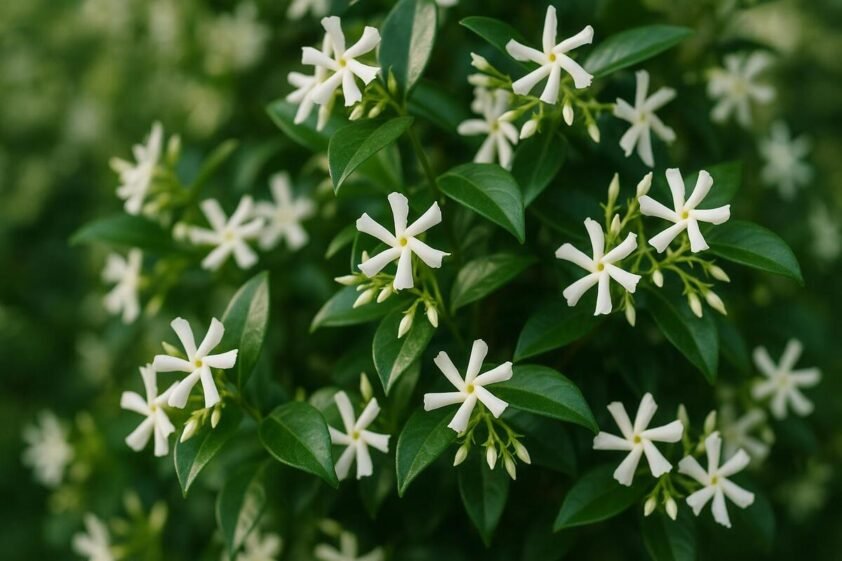
The Allure of Confederate Jasmine
An Introduction to a Garden Favorite
Confederate Jasmine, known scientifically as Trachelospermum jasminoides, is a celebrated favorite among gardeners. This evergreen vine is prized for its stunning display of small, star-shaped white flowers that release an intoxicatingly sweet fragrance, especially on warm evenings.
Its versatility is another key to its popularity. Whether trained to climb a trellis, cascade over a wall, or spread as a lush ground cover, this plant brings a touch of elegance and a delightful aroma to any landscape.
What’s in a Name?
While commonly called Confederate Jasmine, this plant also goes by other names, including Star Jasmine and Chinese Star Jasmine. These names hint at its appearance and origins.
Despite its common name in the United States, it is not native to the American South. This beautiful vine originates from eastern and southeastern Asia, including regions of China and Japan, where it has been cultivated for centuries.
Ideal Growing Conditions for Thriving Plants
The Perfect Amount of Sunlight
For the most abundant blooms and vigorous growth, Confederate Jasmine thrives in a location that receives full sun to partial shade. Providing at least six to eight hours of direct sunlight each day will encourage a profusion of flowers.
While it can tolerate shadier conditions, the plant may grow more slowly and produce fewer of its signature fragrant blossoms. Finding that sunny spot is key to a happy and healthy plant.
Soil and Watering Essentials
Confederate Jasmine is not overly demanding when it comes to soil. It performs best in well-drained, loamy soil that is rich in organic matter. Good drainage is crucial to prevent root rot.
During its first growing season, regular watering is important to help it establish a strong root system. Once established, it becomes remarkably drought-tolerant, requiring water only during extended dry spells.
Climate and Temperature Needs
This hardy vine is well-suited for warmer climates, flourishing in USDA hardiness zones 8 through 11. It can withstand high summer heat with ease.
It also has a surprising tolerance for cold, surviving temperatures as low as 10 to 15 degrees Fahrenheit. This resilience makes it a reliable choice for gardens in a wide range of temperate regions.
Planting and Long-Term Care
A Step-by-Step Planting Guide
Planting Confederate Jasmine is a straightforward process. Begin by digging a hole that is slightly deeper and two to three times wider than the root ball. Place the plant in the hole, ensuring the top of the root ball is level with the ground.
Backfill the hole with soil, gently tamping it down to remove air pockets. Water the plant thoroughly after planting and add a layer of mulch to retain moisture and suppress weeds.
Pruning for Health and Shape
Pruning is essential for maintaining the health and desired shape of your Confederate Jasmine. The best time to prune is in late summer or early fall, just after the main flowering period has ended.
When pruning, it is advisable to wear gloves, as the stems exude a milky white sap that can cause skin irritation. Trim away any dead or overgrown branches to encourage new growth and a fuller appearance.
Fertilizing for Abundant Flowers
To promote a spectacular display of flowers, a little fertilizer can go a long way. Feed your Confederate Jasmine in the early spring with a balanced, slow-release fertilizer.
An additional feeding in the middle of summer can provide an extra boost, ensuring the plant has the nutrients it needs to produce its beautiful, fragrant blooms throughout the season.
Creative Ways to Showcase Confederate Jasmine
A Versatile Star in the Landscape
The true beauty of Confederate Jasmine lies in its adaptability. It can be trained to climb and adorn trellises, arbors, and fences, creating a living wall of green foliage and delicate white flowers.
Alternatively, it can be allowed to sprawl across the ground, where it forms a dense, fragrant mat that is perfect for suppressing weeds and adding year-round interest to the garden floor.