
Was the clash on the banks of the Wabash River in 1811 a decisive military victory, or a political maneuver that simply accelerated a greater conflict? The Battle of Tippecanoe, fought on November 7, 1811, remains a pivotal and controversial moment in the history of the American frontier.
It forever linked the name of William Henry Harrison with the aggressive westward expansion of the United States.
The engagement, which took place near present-day Battle Ground, Indiana, was a culmination of years of escalating tensions between American settlers and a powerful Native American confederacy. It was a battle for land, sovereignty, and the very future of the Northwest Territory.
The Seeds of Conflict: Land, Treaties, and a Confederacy
The early 19th century saw a relentless push by the United States government to acquire Native American lands through a series of treaties. This expansionist policy was driven by the growing population of American settlers eager to move west.
William Henry Harrison and the Quest for Land
As the Governor of the Indiana Territory, William Henry Harrison was the primary agent of this policy. He was tasked with securing title to millions of acres for the U.S. government.
Harrison employed a strategy of negotiating with individual tribal leaders, often exploiting divisions and the economic dependency of certain groups.
His efforts culminated in the 1809 Treaty of Fort Wayne, which ceded a vast tract of land to the United States.
This treaty, however, became a flashpoint that ignited widespread resistance among the Native American nations who viewed the land as communal property, not something to be sold by a few chiefs.
Tecumseh’s Vision and the Prophet’s Influence
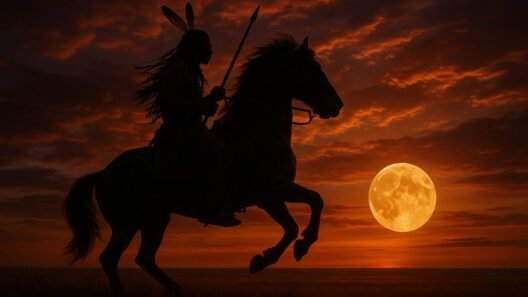
The most formidable opposition came from the Shawnee chief Tecumseh and his brother, Tenskwatawa, known as “The Prophet.” Tecumseh was a brilliant orator and military strategist who advocated for a pan-tribal confederacy.
His vision was simple yet revolutionary: no single tribe had the right to sell land, and any treaty made without the consent of all tribes was invalid.
He traveled extensively, urging warriors to abandon their individual chiefs and join his unified resistance.
Tenskwatawa, the spiritual leader, established Prophetstown at the confluence of the Wabash and Tippecanoe Rivers. This settlement became the heart of the movement, a place where warriors from various tribes gathered to revitalize their culture and prepare for a stand against the encroaching Americans.
The March to Prophetstown
As Tecumseh traveled south to recruit the Muscogee and other tribes, Harrison saw an opportunity to strike at the heart of the confederacy while its military leader was absent. He viewed the growing power of Prophetstown as an existential threat to the territory.
In the autumn of 1811, Harrison assembled an army of approximately 1,000 men, composed of regular infantry and militia.
His objective was clear: to intimidate the inhabitants of Prophetstown and force Tenskwatawa to disperse his followers.
Harrison’s army marched toward the settlement, arriving on November 6. He camped his troops on a high, wooded bluff near the town and arranged to meet with the Prophet the following day, intending to demand the dispersal of the warriors.
The Night of the Attack: November 7, 1811
Despite Tecumseh’s explicit instructions to avoid conflict, Tenskwatawa was convinced by a vision that the Great Spirit would protect his warriors and deliver the Americans into their hands. He ordered a surprise attack on Harrison’s camp before dawn on November 7.
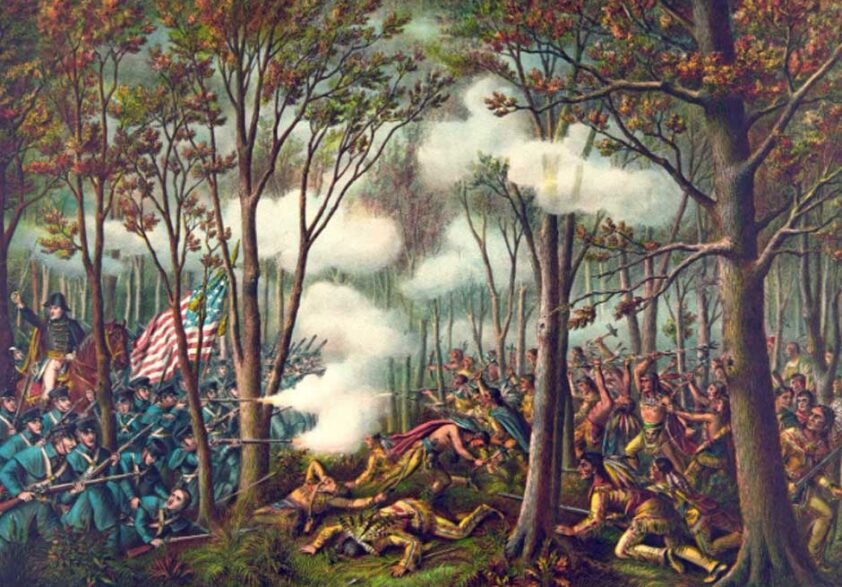
The Native American forces, estimated to be between 500 and 700 warriors, launched a fierce assault on the American perimeter. The suddenness of the attack caused initial panic among Harrison’s inexperienced militia.
However, Harrison, a seasoned military man, quickly rallied his troops. The battle raged for over two hours in the darkness and confusion of the early morning.
The American forces held their ground, suffering heavy casualties but ultimately repelling the attack.
The warriors eventually withdrew, leaving the Americans in possession of the field. The next day, Harrison’s men marched into the abandoned Prophetstown and burned it to the ground, destroying the winter food supplies and effectively scattering the remaining inhabitants.
A Costly Victory: The Immediate Aftermath
Harrison claimed a decisive victory, but it came at a high cost. The American forces suffered 62 killed and 126 wounded, a casualty rate of nearly 20 percent. The Native American losses were estimated to be around 50 to 65 killed.
While the battle was tactically inconclusive, its strategic impact was profound. It shattered the immediate power base of Tenskwatawa and his spiritual influence.
More importantly, the destruction of Prophetstown convinced Tecumseh that a peaceful resolution with the United States was impossible.
He formally allied his confederacy with the British, a move that directly contributed to the outbreak of the War of 1812 just a few months later.
The Political Echo: “Tippecanoe and Tyler Too”
The Battle of Tippecanoe transformed William Henry Harrison from a territorial governor into a national hero. The victory, though controversial, was celebrated across the country as a triumph over the “savage” threat.
Decades later, in 1840, Harrison successfully leveraged his military fame in his presidential campaign.
His campaign slogan, “Tippecanoe and Tyler Too,” immortalized the battle and propelled him into the White House, making the name of a small Indiana river a household phrase.
Legacy and Lasting Impact
The Battle of Tippecanoe is often seen as the beginning of the end for the Native American resistance in the Old Northwest. It was a significant step in the process of clearing the way for American settlement.
The battle remains a powerful symbol of the conflict between expansion and sovereignty.
It is a reminder of the complex and often violent origins of the American frontier, and the enduring legacy of the leaders who fought on both sides.
Frequently Asked Questions (FAQ) About the Battle of Tippecanoe
What was the main cause of the Battle of Tippecanoe?
The primary cause was the conflict over land ownership in the Indiana Territory. Governor William Henry Harrison’s aggressive land acquisition policies, particularly the 1809 Treaty of Fort Wayne, were fiercely opposed by Tecumseh’s pan-tribal confederacy, which sought to halt American expansion.
Who were the main leaders involved in the battle?
The American forces were led by William Henry Harrison, the Governor of the Indiana Territory. The Native American warriors were led by Tenskwatawa, known as The Prophet, the spiritual brother of the great Shawnee chief Tecumseh, who was absent at the time of the battle.
What was the significance of the Battle of Tippecanoe?
The battle’s significance is primarily political and strategic. It destroyed Prophetstown, the spiritual and logistical center of Tecumseh’s confederacy, and pushed Tecumseh into a formal alliance with the British, making it a precursor to the War of 1812. Furthermore, it launched William Henry Harrison’s political career, eventually leading to his presidency.